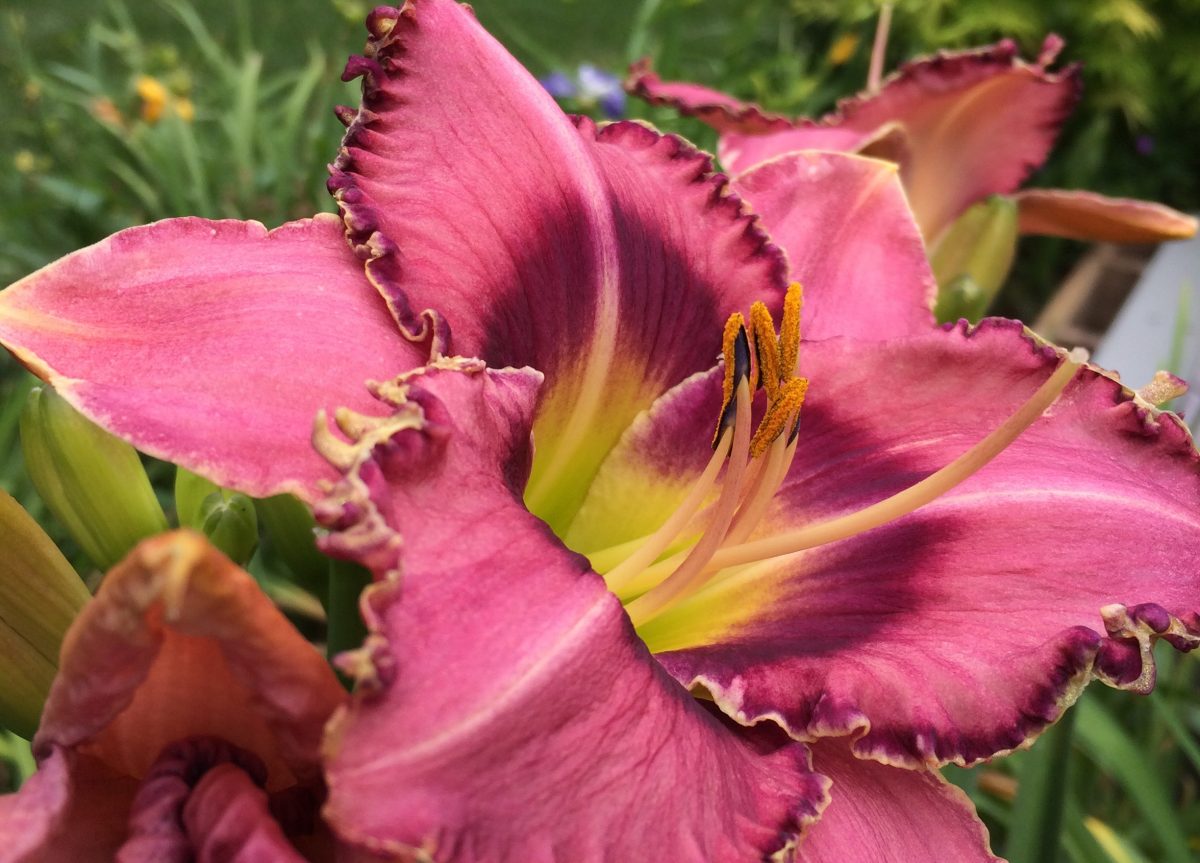
Stumbled upon some photos I took back in February of 2024. In Wisconsin, February is generally not known for Spring-like weather, but that’s just what we got during the second week of the month. How wonderful it felt to have the sun shining on me as I puttered about in my flowerbeds. It seemed to me that the animal kingdom was sensing the return of spring, with a nearby pond filled with geese returning from their winter migration.
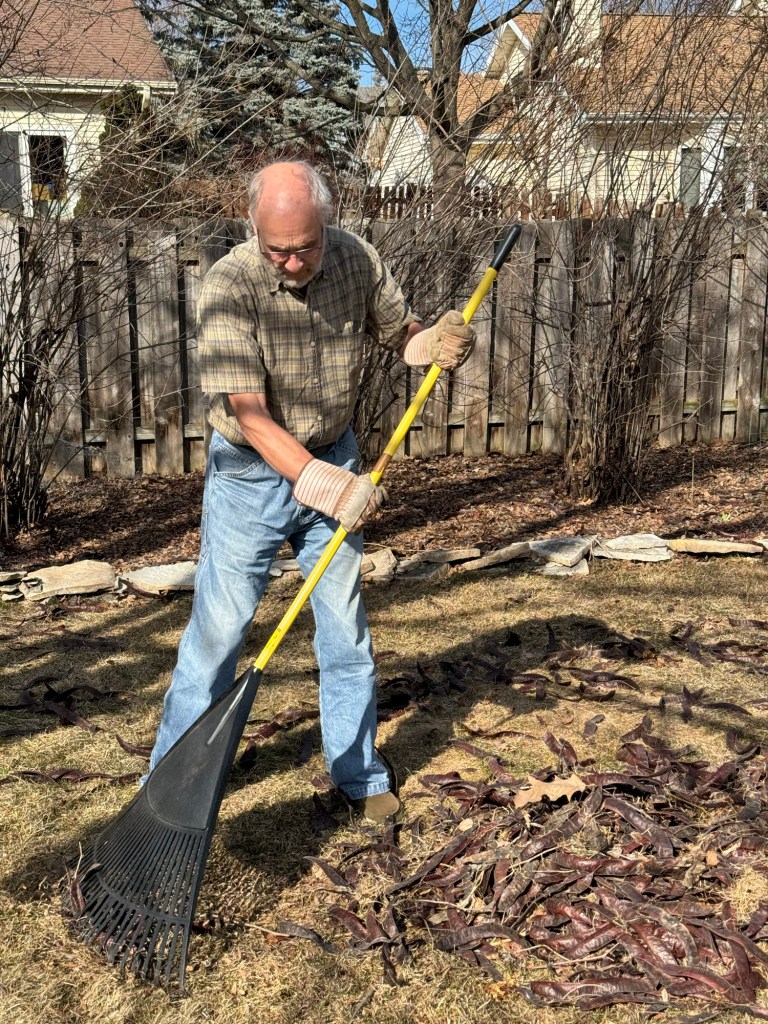
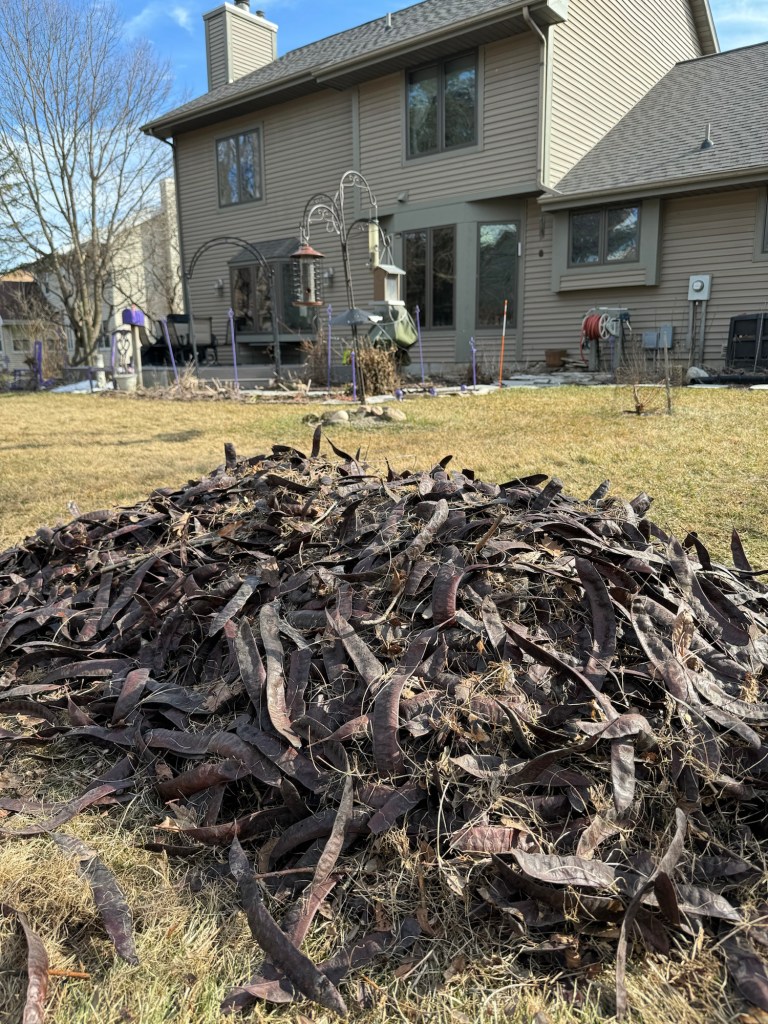
Our locust tree seemed to decide to shower us with more than the usual boatload of seed pods. Since the weather was warm and relatively dry, I spent a little time raking and filling big Rubbermaid bins with the unsightly mess. Four bins to be exact. The next day my hubby joined me in raking up seed pods, creating two very large piles. Apparently, there is a name for this overzealousness in producing seed pods–it’s called a “mast seeding event” and can be attributed to our wacky winter weather.
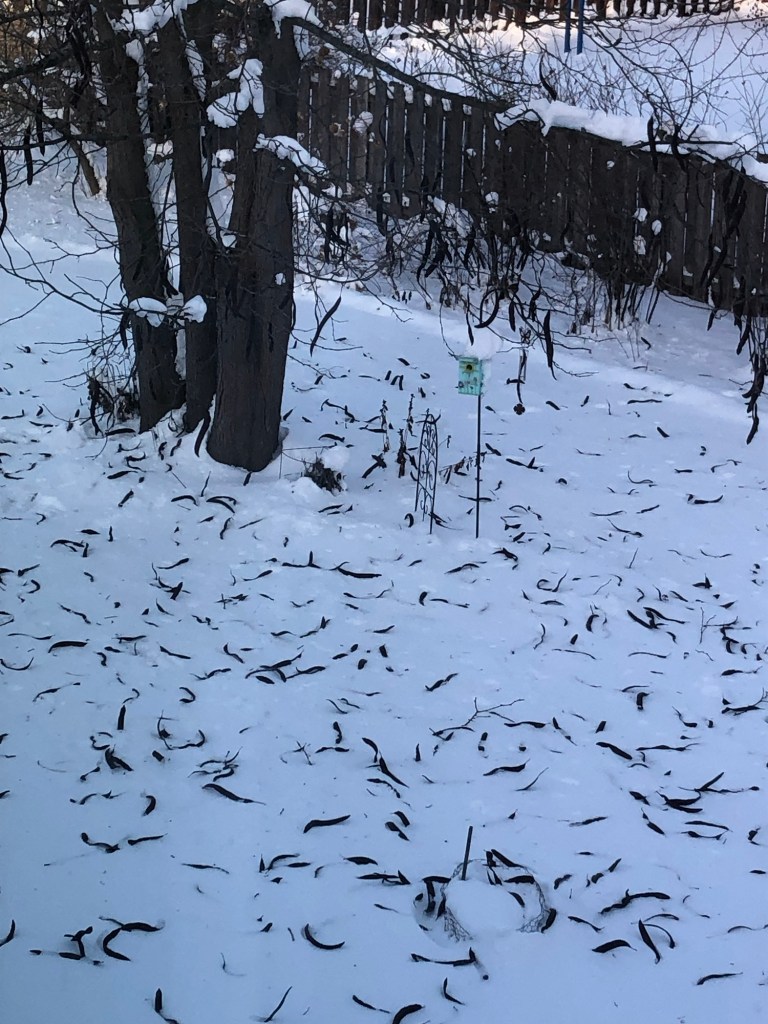
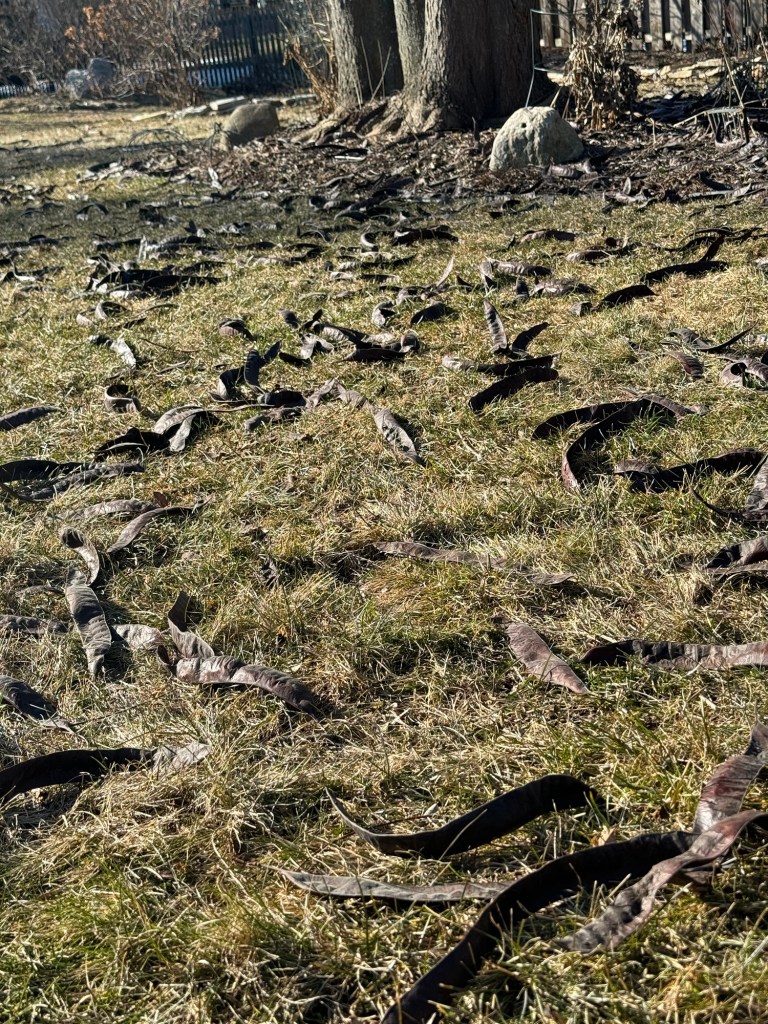
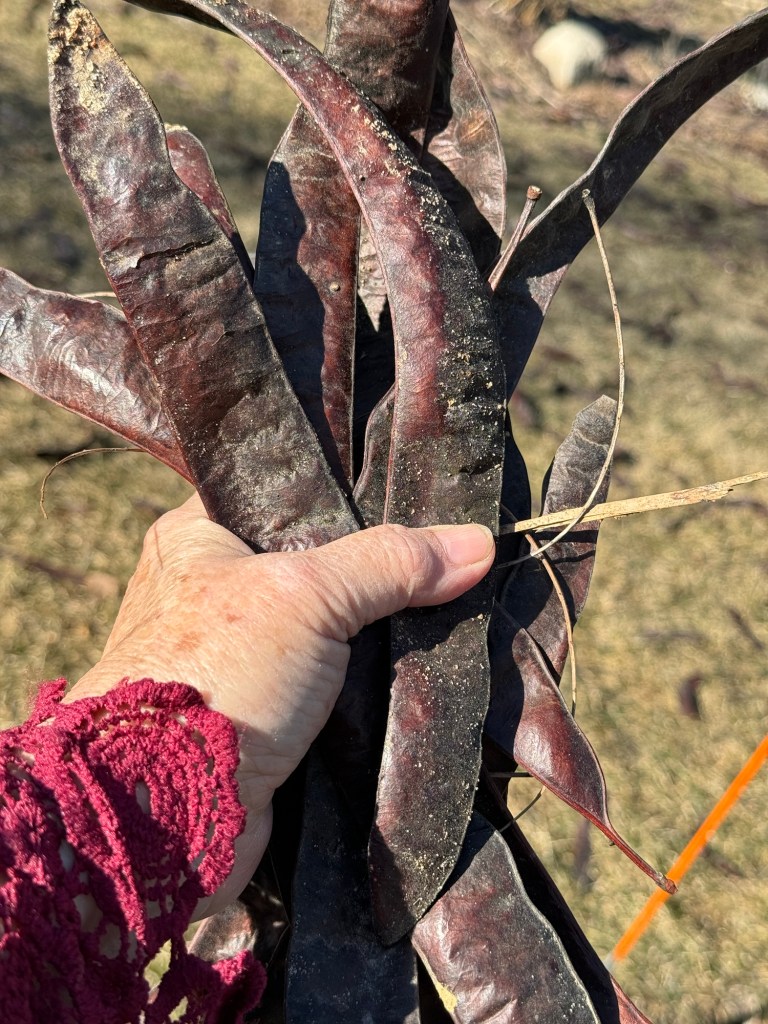
It’s a yearly battle. Now, two years later, we’re creeping up on the month of August, and my frequent weeding adventures still yield numerous seed pods and little locust seedlings.
I will admit to feeling a bit overwhelmed by this tree’s propensity for making a mess. Then, I survey the plants beneath it happily thriving in its dappled shade, and I’m a little less annoyed by the inconvenience.
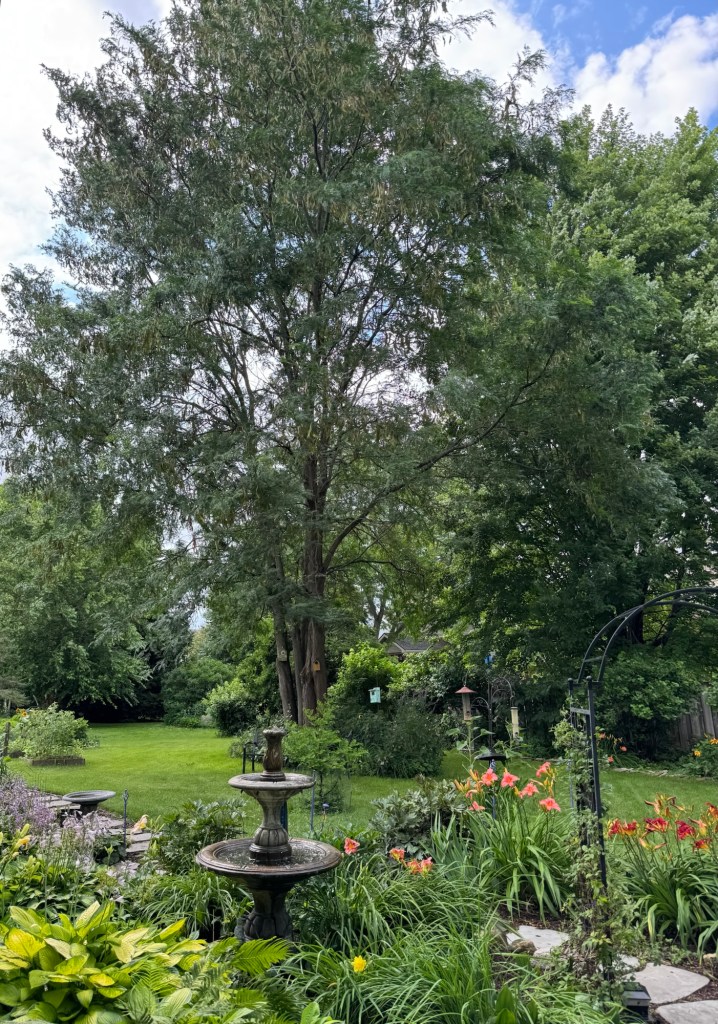
It’s pretty warm and humid outside today, so I sit on my garden bench and take a little break from weeding. As if in apology for all the mess, the locust tree hugs me with its cooling shade as I sit beneath its branches enjoying the peace of my little backyard.

 Barefoot Lily Lady
4 bins of seeds would have me looking at the tree sideways as well. All worth it for the shade tho!
LikeLike
Our grandsons sometimes like to earn a little extra $$$ collecting those seed pods. If every year were a banner year like this one was, we could possibly finance a down-payment on their first car.
Thanks for stopping by for a blog visit, Tracy.
LikeLike
It’s fascinating to see. If you happen to know its botanical name, it would help me identify it properly. I think it’s possibly a carob, but I’m not sure.
LikeLike
I honestly don’t know its botanical name, Rick. It was a tree that was original to the property. I was told that it was a “honey locust” tree. Googling for more info, I found a look-alike tree with a name of Gleditsia triacanthos inermis.
LikeLiked by 1 person
Thank you.
LikeLike
I always learn about some new flowers or plants from your post. The only locust I’ve heard of so far is the insect variety. I’ll have to Google this one. Glad it makes up for the mess by giving you shade!
LikeLike
Thanks for stopping by to comment, Jaya. I believe the tree was originally a thornless hybrid of the “honey locust” tree, planted by the first owners of our home back in the late ’80’s. The tree was severely damaged by a storm, so we cut it completely to the ground. The tree we have now is actually several “suckers” that grew up together from the underground root system. The resulting multi-trunk tree we have today is not true to the original honey locust; rather, it seems to have reverted to one of the “parent” trees, so sometimes has thorns and tends to be more than a bit aggressive in its seeding habits. Still, I am glad to have its shade, in spite of its annoying habits.
LikeLiked by 1 person
Your last couple of lines reminded me of a dear friend – often very annoying but without whom life would be difficult! I think I will share your post with her 😁😁
LikeLike