You’ve put years of your life on “pause” so that you can provide the care your loved one deserved during the worst years of their life. Then, all at once, it seems, what you’ve known would happen all along finally happens.
They’re gone.
Yet, when it comes time to hit the “play button” and get on with your life, you discover you’re not the same person you were. The all-encompassing caregiving experience has changed your life.
So, you may ask, what has changed?
In addition to knowing more about Alzheimer’s than I ever dreamed possible, I have a whole new skill set. I work with certified nursing assistants and am continually amazed at how much of what they have learned in their training I learned by necessity.
I’m much more assertive than I was prior to caring for my mom. I learned this by being an advocate for my mom and my brother with their physicians and healthcare insurance providers. I learned to speak up for what was right while making countless phone calls to people and organizations who were preying on mom and helping her spend her modest pension and Social Security income. My newly acquired boldness helped me to relentlessly insist upon a refund from the companies taking hundreds of dollars from her every month.
Another thing has changed too. My eyesight. My physical vision is changing due to a pair of cataracts, but the vision I’m talking about isn’t physical.
It’s an internal ability to see the caregivers around me more clearly than ever.
Not long ago, my hubby took me out for lunch. I saw the caregiving granddaughter sitting in the corner with her memory-challenged grandma. While others probably tuned it out, I heard her gently answering her grandma’s myriad questions — over and over again. I heard this precious granddaughter sharing and resharing the “news” of her pregnancy and the baby who would arrive in July – to the beautiful and heartrending delight of that baby’s great-grandma. I could see that granddaughter rewinding bits and pieces of her conversation: that she lived just down the block from her grandma, the names and ages of her children, what they were doing in school, and all of the details about which her grandmother was curious.
With caring for Momma behind me, and eyes that are now wide open to the world of dementia caregivers, it’s my heartfelt desire to press life’s “play button” again—this time purposefully engaging with and caring for the caregivers I encounter all around me.
I am a caregiving daughter forever changed by Alzheimer’s.
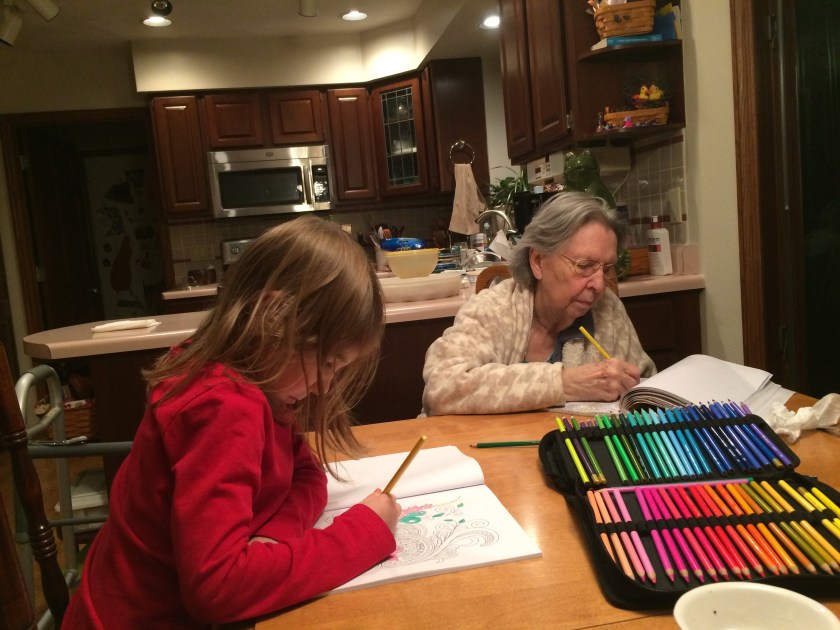
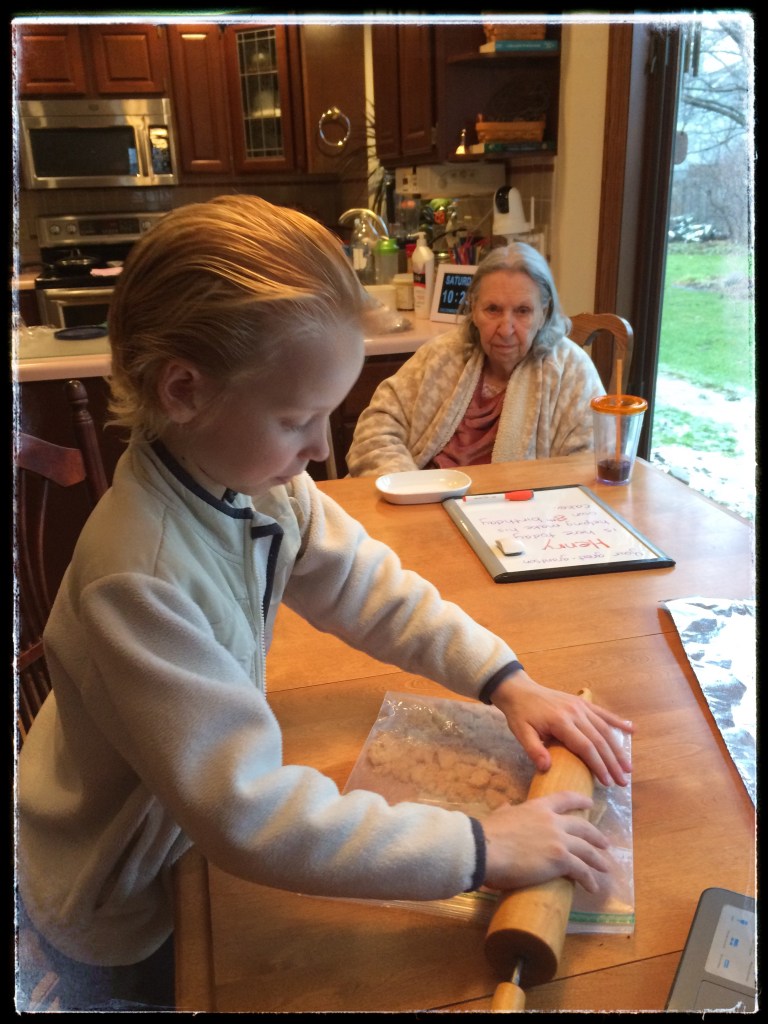
Mom is so focused on her coloring. I’ve been sitting at the table with her as she colored for the past few hours. I just stood up to move a bit and she looked up and said in a tone of surprise, “Oh hi! When did you get here?” Sad, but sweet. Today I’ve been her mom. When I told her it was time to put her coloring away and get ready for bed, she stalled and pouted just like a child. “But I’m not tired! You always make me quit when I’m having fun!”
Cindie’s Caregiving Journal, February 11, 2018
There are those who wonder why caregiving children speak to their memory-challenged parent like they are a child. Some also believe it to be a bit demeaning to provide child-like things for them to do as activities.
I get the concern. I’ve had that concern in the past too.
Not anymore.
Now that I have journeyed alongside my mother (who had Alzheimer’s), I totally get it.
As Alzheimer’s claimed more and more of her cognitive abilities, it seemed that mom traveled backward in time to a time when she was much younger. Toward the end, she became very childlike. She often thought I was her mom. There was no use in fighting the role reversal—it was part of the disease progression.
Like a child, mom enjoyed coloring. When I first introduced adult coloring books, her coloring was magnificent and her eye for color was impeccable. She stayed within the lines and had the art of “shading” down pat. Now, as I look through her coloring books, I can see the obvious regression in ability. In the beginning, mom would use all of her colors; toward the end, she settled in on yellow and green. In the beginning, mom’s color choices would closely approximate the true color of the object she was coloring. As the disease advanced, the coloring books I purchased for her were simpler, in keeping with her diminishing artistic abilities and instinct for color. Ultimately, in the last few months of her life, much like a child who colors everything in their favorite color, she would color everything yellow or green.
Correspondingly, mom’s behavior changed. She’d have times when she was unhappy about something and would throw a childlike tantrum. Tears, pitiful pouting face, crossed arms and all. Mom reverted to baby-like play on the floor, preferring to crawl about on the floor, rather than tootle around in her wheelchair. Like the child running out into a crowded room butt-naked, inhibitions over inappropriate public behavior goes by the wayside too.
On those days when mom thought I was her mom, I soon learned it was in mom’s best interest if I would just play that role. Putting on the soothing “mom voice” was part of it. Likewise, when encouraging her to do what needed to be done (like changing her clothing), it was necessary to communicate with her as I would with a young child or (sometimes) like a toddler, using what I’ll call “simple speak.”
So, dear reader who has never experienced the role of caregiver, please be gentle and understanding with the caregivers you know. Your caregiving friend is living in an upside-down world juggling sippy-cups, adult-size diapers and discreet diaper bags, mealtime feeding issues, and lack of good sleep. Believe me, your prayerful encouragement and friendship would mean the world to them.
Here’s the next in a series of Tuesday’s Caregiving Tips posts inspired by A-Z Caregiving Tips (an article in Alzheimer’s Today pictured below). A diagnosis of cognitive impairment or memory loss presents caregiving challenges, each as varied as the person experiencing it. Alzheimer’s was the diagnosis that spelled memory loss for my sweet mom. You can read my previous posts for my personal tips on A – M. Today I am sharing my thoughts about “N” and will add my own “O,” since the article did not address that particular letter. Thanks for stopping by to read my blog – the “likes” and “comments” of my readers feed my motivation to write.
N – Note that I take your words literally, so avoid teasing and sarcasm.
In the early stage of memory loss, mom would sometimes take “just kidding” comments quite literally. Likewise, when mom reached what was thought to be the stage of “moderately severe” memory loss, it seemed that her ability to understand and appreciate sarcastic humor and irony disappeared too. This was especially noticeable in social “table talk” situations.
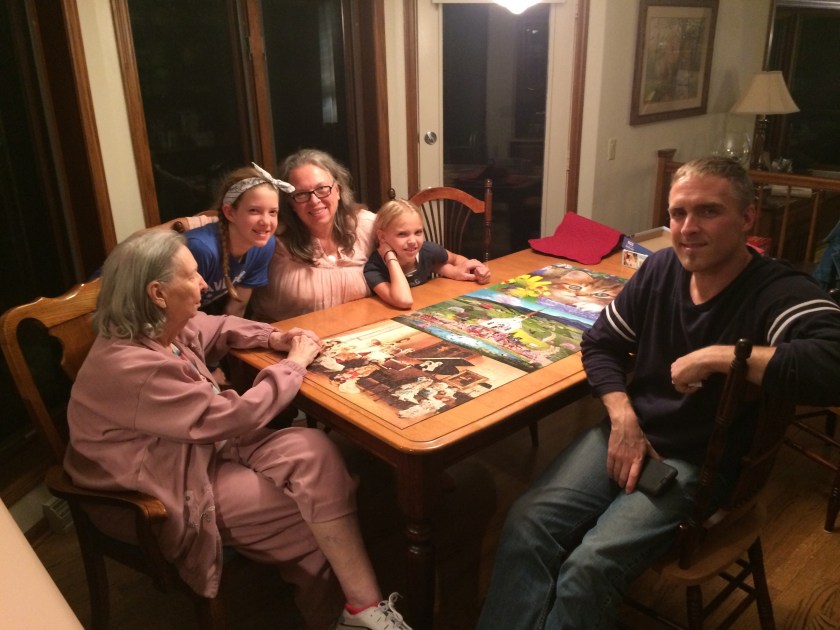
Mom enjoying putting together puzzles (3 in one evening!) with the help of her grandson Matt and her great-granddaughters Mia and Noelle. Puzzles were helpful in guiding enjoyable conversations with mom.
Teasing and sarcasm are part and parcel of family gatherings such as Thanksgiving. We like to tell stories on one another and kid each other about silly things we’ve done lately. We sometimes use tongue in cheek jesting during our bantering around the table. Mom always had a quiet sense of humor–she would appreciate a good joke, but usually was not the one to tell it. She’d smile at the kids. But now, while she herself could often say something witty, there was no understanding of the “punch line” to someone else’s joke and a blank look at any attempt at humor.
Turning off the humor at the table isn’t the answer, but understanding how our loved one with dementia might be processing the conversation can be helpful in making the conversation inclusive for them too. Our bigger family dinners (e.g. Thanksgiving and birthdays) were the most confusing for my sweet mom. She would sometimes leave the table and go to the quietness of her room. When that would happen, family would go in an visit her one on one. She enjoyed that experience much more.
Another helpful tactic was to do something mom enjoyed at the table. Working on a puzzle or coloring became a unifying factor in conversation for her.
O – Own up to your mistakes in caregiving, but don’t beat yourself up about them. Mercy is new every morning.
I freely admit to making a lot of mistakes in caregiving. I recall days when my voice carried more than a little annoyance in it and harsh words would fly. Days when I was anxious and weary and my facial expressions did not communicate Christ-like love and compassion. There were times when I would confuse mom by asking if she remembered something when I knew full well that she couldn’t–or, similarly, when I would expect her to remember something we had already talked about. One of the hidden grace gifts of Alzheimer’s is that momma wouldn’t stay hurt and mad at me for long. She would soon forget my blunders and I would have another opportunity for a do-over in caregiving.
Likewise, in other relationships, there were times when I did not express my appreciation freely enough. I’m thinking of a time when I made my sister feel bad about how she handled a caregiving situation, rather than being gracious and knowing she did what she thought was best when she was taking a turn at caring for our mom. It’s sometimes easier to see the mistakes and failure of others than it is to see the same problem in our own lives.
It’s a wonderful thing for me as a believer in Christ to know that His steadfast love for me will never cease. Never. Ever. His mercy will never come to an end. Never. Ever. I praise God for His faithfulness in providing a daily (constant) supply of love and mercy. Knowing and believing the truth expressed in Lamentations 3:22-24 helped me through many times when I felt like a dismal failure as a caregiving daughter.
The steadfast love of the Lord never ceases; his mercies never come to an end; they are new every morning; great is your faithfulness. “The Lord is my portion,” says my soul, “therefore I will hope in him.” (Lamentations 3:22–24)
Written with love and great admiration for all those who are caring for a loved one who is facing Alzheimer’s or any other diagnosis that spells memory loss. I write from my experience of caring for my sweet mother in her later years with Alzheimer’s.
Here’s the next in a series of posts inspired by A-Z Caregiving Tips (pictured below). A diagnosis of cognitive impairment or memory loss presents caregiving challenges, each as varied as the person experiencing it. Alzheimer’s was the diagnosis that spelled memory loss for my sweet mom. You can read my previous posts for my tips on A – L. It seems I have a lot to say about “M,” so I will focus on that for this week.
Make new ways I can be of service to others
Mom was a nurse. A dedicated and amazing nurse. Even after she retired from her long career in nursing, she still practiced nursing in an unofficial way as she came alongside family and friends as they went through their physical trials in life. She was dad’s constant companion whenever he faced any of his cancers and surgeries. She served her friends as the requisite driver and responsible party when those friends faced day surgeries of various types. If someone was hospitalized, she was almost always one of the first visitors. Several of her friends had her come along to their surgeon’s or oncologist’s office when they were going to receive their scary diagnosis. Mom knew just the right questions to ask and how to help her friends through the difficult days ahead.
The time came when Mom was the patient with symptoms of short-term memory loss. I’m sure she knew something was amiss long before I started noticing memory blips. Who knows how many years she wrestled with that knowledge alone? Based upon dated notes and lists I found here and there, I would say for a few years.
Although Mom forgot many things, the experiences of her lifetime still served as a guide in her daily interactions. Even after mom moved in with me and then later into assisted living memory care, I routinely saw the nurse in mom present when she’d notice someone wasn’t feeling well and then do her best to make sure they were cared for appropriately.
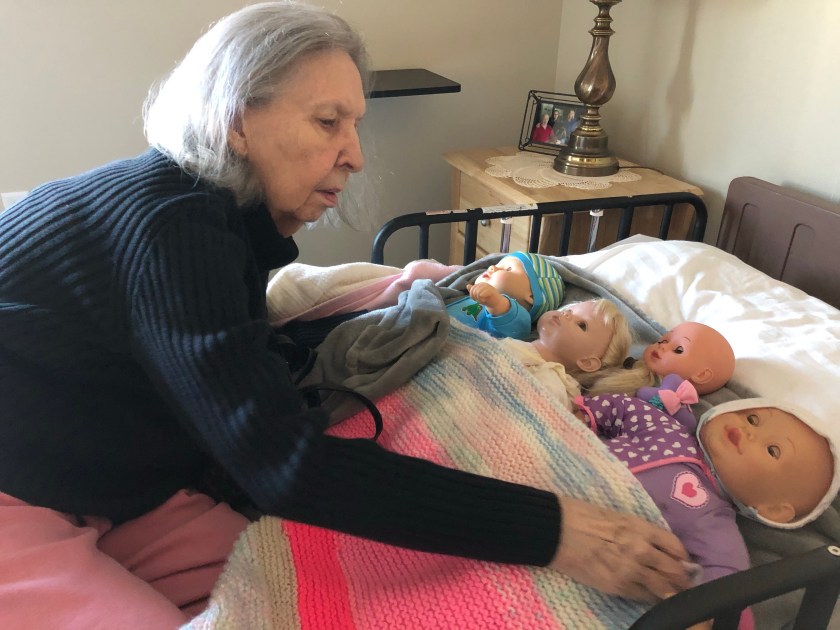
Momma lovingly putting her “babies” to bed
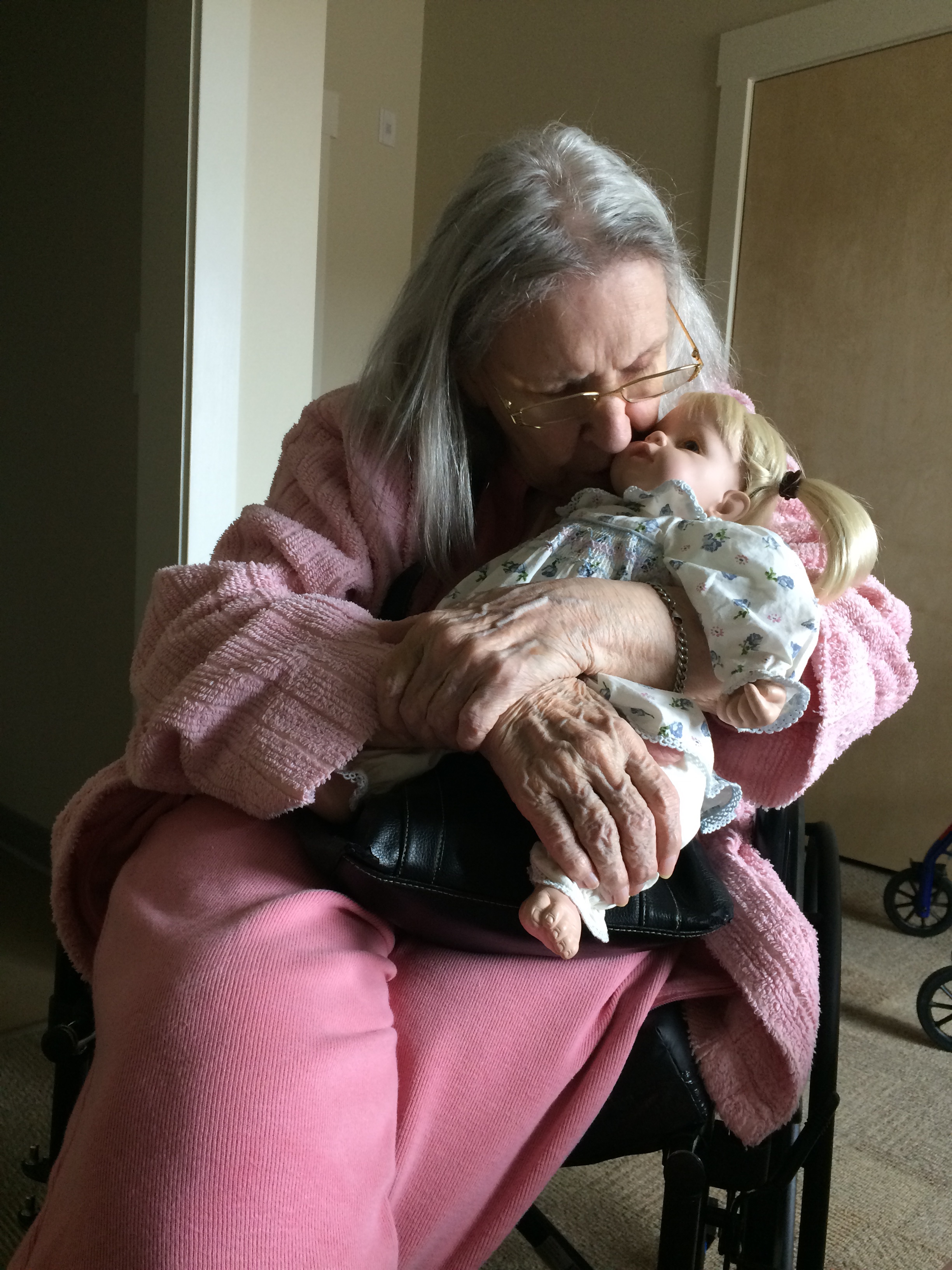
She usually couldn’t remember she was my mom, but I saw the loving mother in her displayed in the way she cared for dolls. It was like a special window into her past which allowed me the privilege of seeing what she may have been like when she mothered me as a baby. (Mom and me in this photo.)
Let me share just a few photos of her doing things which made her feel useful during her years spent living with dementia.
I’m thinking now of a resident at the assisted living memory care home where my mom lived for her last 14 months of life. June was usually the first one up every morning. She took very seriously her job of raising the window shades at the start of the day. The staff would then present her with a large basket filled with freshly laundered clothing protectors (bibs) and towels. June took great pride in folding them.
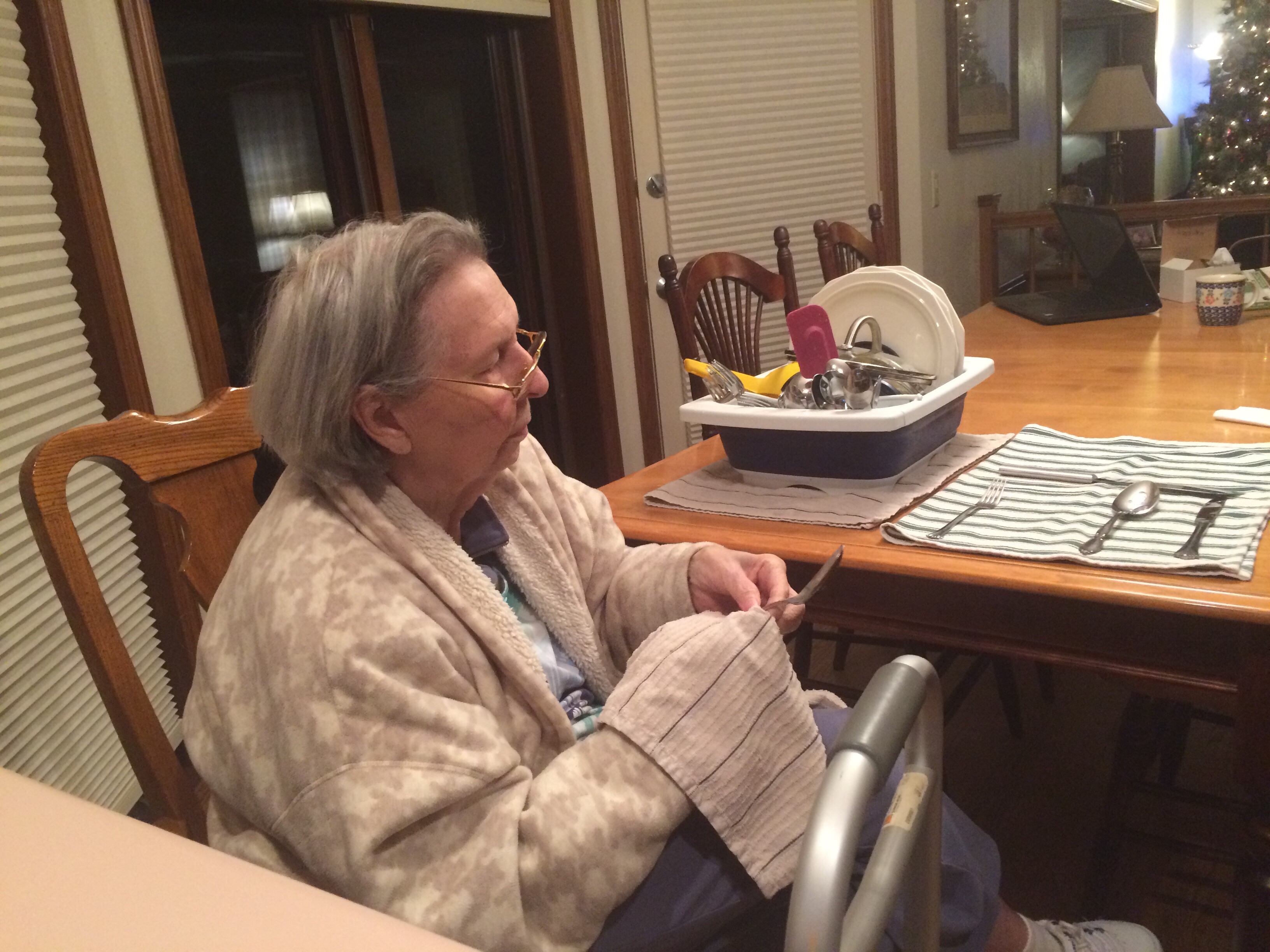
My mom would do the same thing when she was living with us for a few years. She loved to fold laundry, especially when it was warm out of the dryer. The warmth felt good on her arthritic hands. She would also dry dishes for us. Her legs were unsteady, so I would set her up with everything she needed at her place at the kitchen table. Mom had also been into gardening, so I would occasionally try to get her outdoors to help me. She especially enjoyed deadheading and cutting back spent foliage. Her specialty, however, was sweeping. She couldn’t stand to see even one leaf on the deck or porch, so we’d arm her with a broom and she’d happily sweep for quite some time.
I can’t talk about this subject without thinking of Heather, an amazing blogger I follow who cared for her sweet mother too. Heather’s mum, Margaret, had been an artist, so Heather would play to her mum’s interests and strengths by creating art therapy projects for her to work on throughout the day. They even opened an Etsy shop in order to sell some of her ‘Made by Mum’ projects, donating a portion of their profit to the Alzheimer’s Society. Heather’s amazing website Creative Carer is filled with photos and tutorials, a link to her very helpful and inspiring blog, and oodles of practical ideas for caregivers who desire to keep their loved one meaningfully engaged.
I write from my experience of caring for my sweet mother in her later years with Alzheimer’s. I hope that what I write will be an encouragement to those who are caring for someone they love.
Before you read this post, you might want read the A-Z Caregiving Tips (pictured below) which inspired me to write about my own experience related to these tips.
A diagnosis of cognitive impairment or memory loss presents caregiving challenges, each as varied as the person experiencing it. Alzheimer’s was the diagnosis that spelled memory loss for my sweet mom. I have already presented my experience with tips A – I, so let’s move right on to my take on J, K & L.
J just redirect me pleasantly if I keep repeating myself.
When memory loss becomes apparent to family and friends, it’s the repetition of stories which oftentimes raises the warning flag that something is amiss. Mom had several stories that would frequently replay. There was one she would tell about why she loves ice cream. Other repetitious stories related to how she acquired some of the items she owned, including three blue flowerpots and a purple tablecloth. I loved each of the stories and, as I mentioned in my last post, now I wish I had recorded her telling them.
Now, there’s nothing wrong with telling family stories around the dinner table. We all do it. It’s one of the best parts of gathering around the table for a shared meal. But, when the same story keeps looping during the same meal, that’s when things get a little tricky. It’s easy to hurt our loved ones by saying, “You already told me that a hundred times, Mom!” We’re tempted to roll our eyes and inwardly groan, “Oh no! Here we go again.”
That is where the art of pleasant redirection comes into play. In the world of dementia caregiving, there are many opportunities to practice this act of gently helping a forgetful loved one refocus their attention on something else.
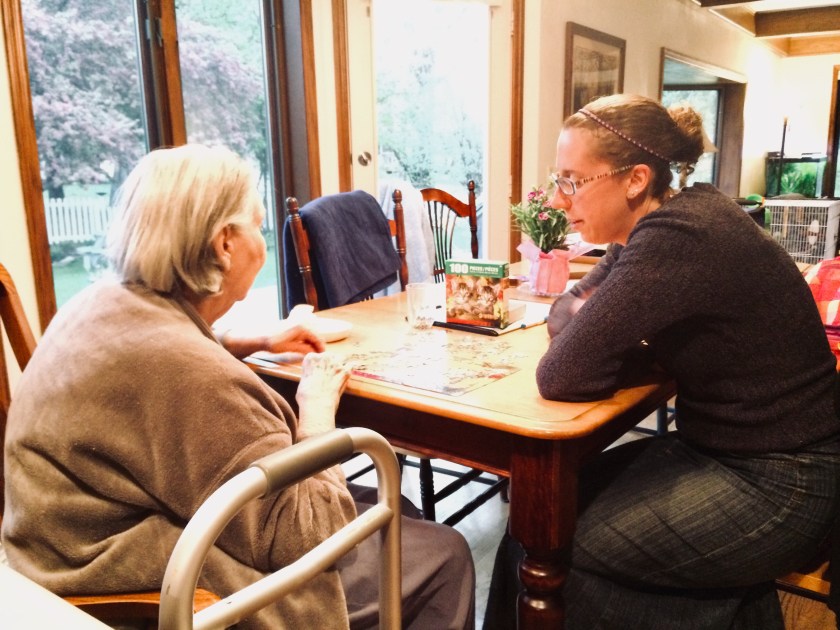
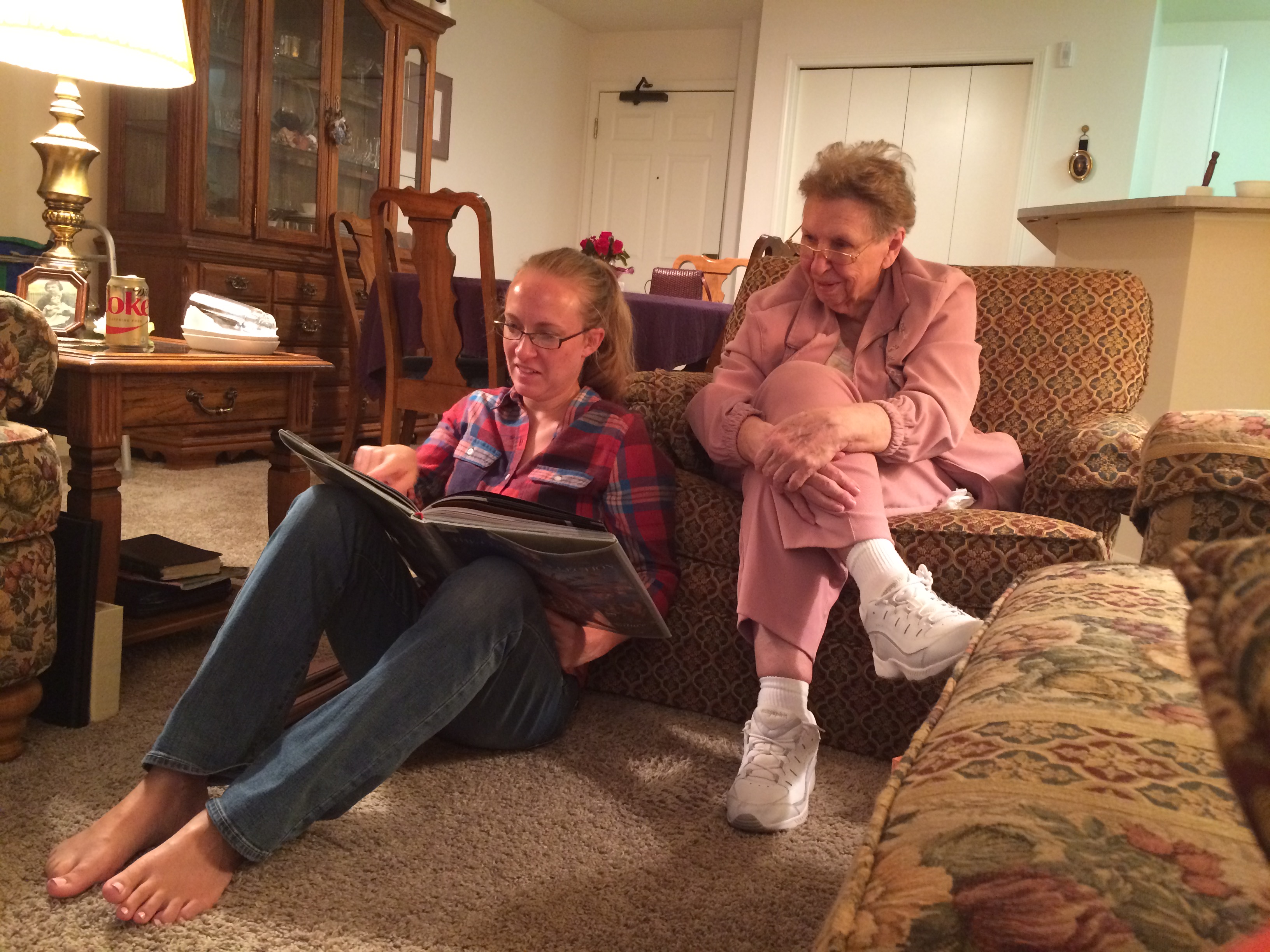
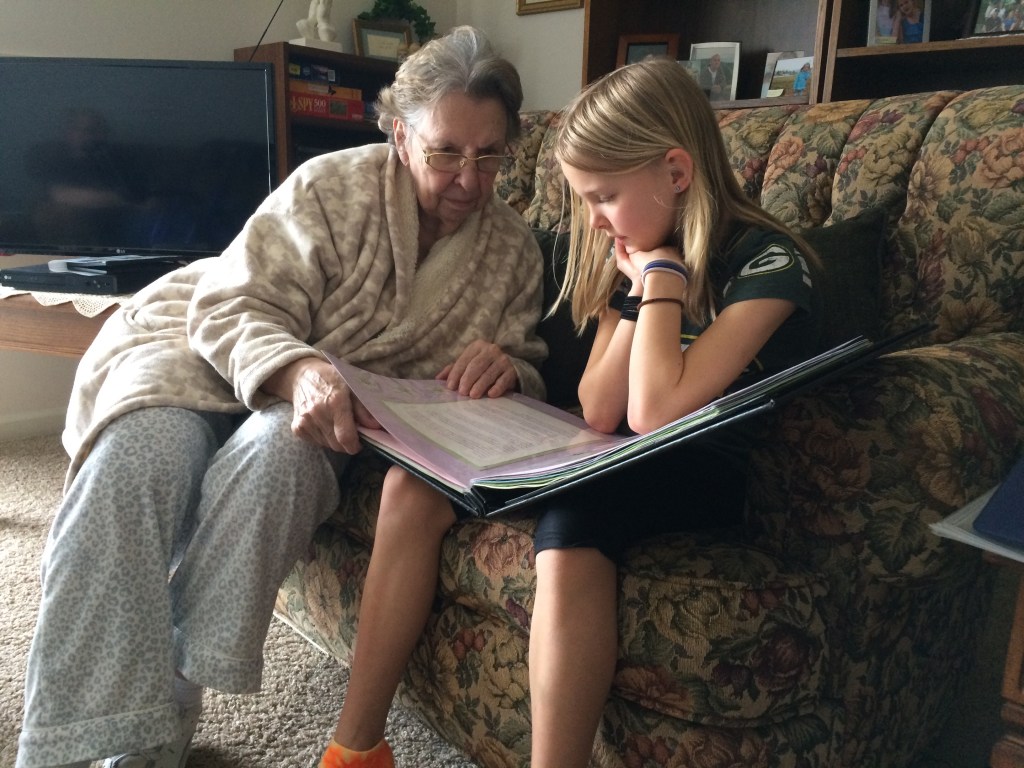
My granddaughter provided one of the best examples of gentle redirection that I have ever seen. My mom found my to-do list on the kitchen table. Thinking it was her own list, mom kept reading the list over and over again, worrying about getting it all done. Violet (who was probably 12 years old at the time) brought a photo album to the table and sat next to her great-grandmother. In one stealth move, Violet opened the photo album and placed it in front of her GGma as she simultaneously slid the list away from view. Then she started paging through the album and talking about the photos. My Mom’s worries melted away and she was immediately engaged in this new direction of thought.
In fact, photo albums and picture books are one of the greatest tools in the toolbox of dementia redirection.
Sometimes, mom would ask the same question repeatedly. One such question had to do with her finances–something she couldn’t handle on her own anymore, but continued to worry about. My husband handled her finances for her and greatly helped alleviate this worry by creating a single page monthly statement which listed all of her financial bottom-line numbers in one place. Mom could read this over and over to her heart’s content. [I explained more about this in Alzheimer’s and Money Worries, which may be of help to anyone going through this stage with a loved one.] If mom was having a fretful moment about money, we could hand her this statement, which we kept on a clipboard. She would sit and read (and re-read) it for a very long while and would often comment about how helpful it was to her.
K Know that closing my eyes may be me trying to find my words.
Word finding is one of the earlier struggles I noticed in my mom’s journey with Alzheimer’s. It’s a problem I am wrestling with these days too. I have noticed that when I am struggling to figure out which word I want to use during a conversation, my family and friends will often provide the word for me during my long pause. Most of the time I appreciate the help; other times it just deepens my awareness and the inkling I have that my later years of life are headed in the same direction of memory loss that my mom experienced.
In fact, photo albums and picture books are one of the greatest tools in the toolbox of dementia redirection.
I don’t remember mom closing her eyes when she was trying to think of what she was going to say–at least not in the earlier stages. I remember that she would avert her eyes upwards and away, as if she was searching the corners of her mind for what she wanted to say. I do this too. I have also noticed something in my own pause to search for the words. By the time I’m ready to add my words to table talk conversation, the direction of the conversation has moved on to something else. It’s frustrating, but it reminds me of something important when engaging in conversation with my memory-challenged friends at my workplace. Don’t be in such a rush–wait for them to answer.
L Listen with me to music and dance tunes.
Mom would rather sit quietly and read a book or magazine than dance or listen to music. It’s not that mom didn’t like music; rather, her hearing deficit made listening to music more than a little bit challenging. While this point doesn’t apply much to my mom, it does bring to mind my work place. I work as a baker in an assisted living memory care home and am sometimes surprised by the music being played in the background for our residents. Sometimes I think the music chosen reflects the preference of the caregiver on duty, rather than the tastes of the generation being served.
The other thing I’ve noticed is that the radio or television in our care home is oftentimes playing too softly. The younger folks who work as the caregivers don’t seem to take into account the need for extra volume in this older population. Nor do we pay enough attention to what is being broadcast on the television in our common spaces. It’s much better, for instance, to choose a classic movie from the era in which these folks lived, rather than a talk show featuring four women arguing their views. Better (in my opinion) to choose a nature show over a scary, blood and guts movie.
Don’t get me wrong–our care home is fantastic and is blessed with a number of great caregivers. But, there is one caregiver who I find to be absolutely delightful. She will put on music the residents love and engage in a little song and dance. She’ll even make up her own tune or sing a familiar jingle, even if she’s just passing through the room on her way to her next task. If they’re having an exercise class, she’ll join in and spread her own brand of love, laughter, song and encouragement. Marnie makes the residents smile (and me too).
The world of memory care caregivers needs more Marnies.
Now that she is no longer here to tell her stories, how I wish I had recorded her voice as she reminisced about her life, and how I wish I had written down those stories she shared. Her stories were part of my life’s story too.
Before you read my post, you might want to take a peek below and read the list of A-Z Caregiving Tips which inspired me to share my own experience related to these tips.
A diagnosis of cognitive impairment or memory loss presents caregiving challenges, each as varied as the person experiencing it. Alzheimer’s was the diagnosis that spelled memory loss for my sweet mom. I have already presented my experience with tips A – G, so let me jump right in where I left off.
H Hear my stories from long ago attentively.
I treasure the rocking chair my husband bought for me in celebration of the birth of our first child. When I walk past it, I sometimes run my hand across the back of the chair and give it a gentle nudge to rock. Sweet memories of rocking my children to sleep or to soothe their tears come to the forefront of my memory. Funny thing is, as often as I rocked my babies, I don’t remember when the last time was that I rocked them. That’s because it happened when I didn’t see it coming.
Photo albums sometimes prompted some of mom’s many stories–some true, some a confabulated combination of true events and a good imagination.
Similarly, there came a time when my sweet mother told each of her oft-repeated stories from her childhood for the last time. It was so easy to tune them out over time because I had heard them so many times. I find grace in knowing that I really was tired and trying to juggle too many things, but oh how I now wish I had taken more time to listen with my heart. Now that she is no longer here to tell her stories, how I wish I had recorded her voice as she reminisced about her life, and how I wish I had written down more of the stories she shared. Her stories were part of my life’s story too.
I Invite me along on community and church gatherings.
Just as the stories our loved ones tell will one day come to an end, so too will their desire to be social. I’m so glad I carved out time to take my mother on a few road-trips “home” to visit her family in West Virginia and Ohio.
Only God knows the measure of our days.
Even though she was in the early stages of memory loss, traveling with her wasn’t easy, but the effort was rewarded many times over as I observed her quiet joy as she spent time with her family (and mine).
Mom was a woman of faith who served the Lord with gladness as long as she was able. The day did come in the fall of 2015 when, for safety sake, I needed to take her car away (I didn’t earn any popularity awards with that decision). Mom’s need for fellowship with her church family was still strong, so I’m thankful for Mom’s friend Jean, who would take mom to church with her whenever Mom was willing and ready. Mom’s ability to measure time and take cues from what was written on her calendar gradually disappeared late in 2015. Sadly, when Mom’s ability to remember the names of even her closest friends diminished, so too did her desire to attend church. Her “last day” attending church happened when we weren’t expecting it either.
Love this picture of mom saying, “Say CHEESE!”
While mom no longer had the desire to go places, I noticed there was still a glimmer of joy when people would come to visit. I soon discovered that the most loving thing I could do for her was to invite family and friends in. Just a few at a time, so as not to overwhelm her.
Mom enjoyed the times when all three of us kids were able to be with her. She didn’t remember the visit for long, and it would usually tucker her out, but the momentary joy was worth the extra effort of finagling Brad’s wheelchair into the house.
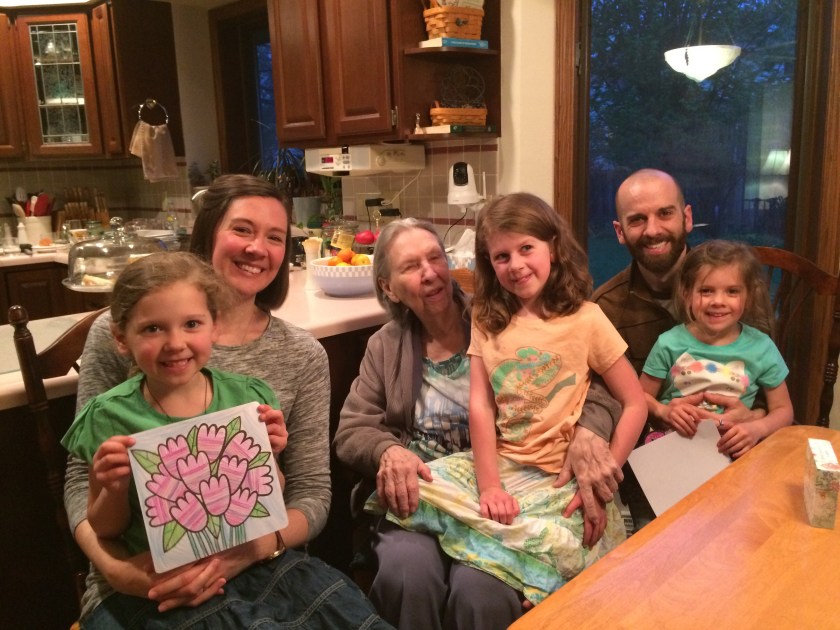
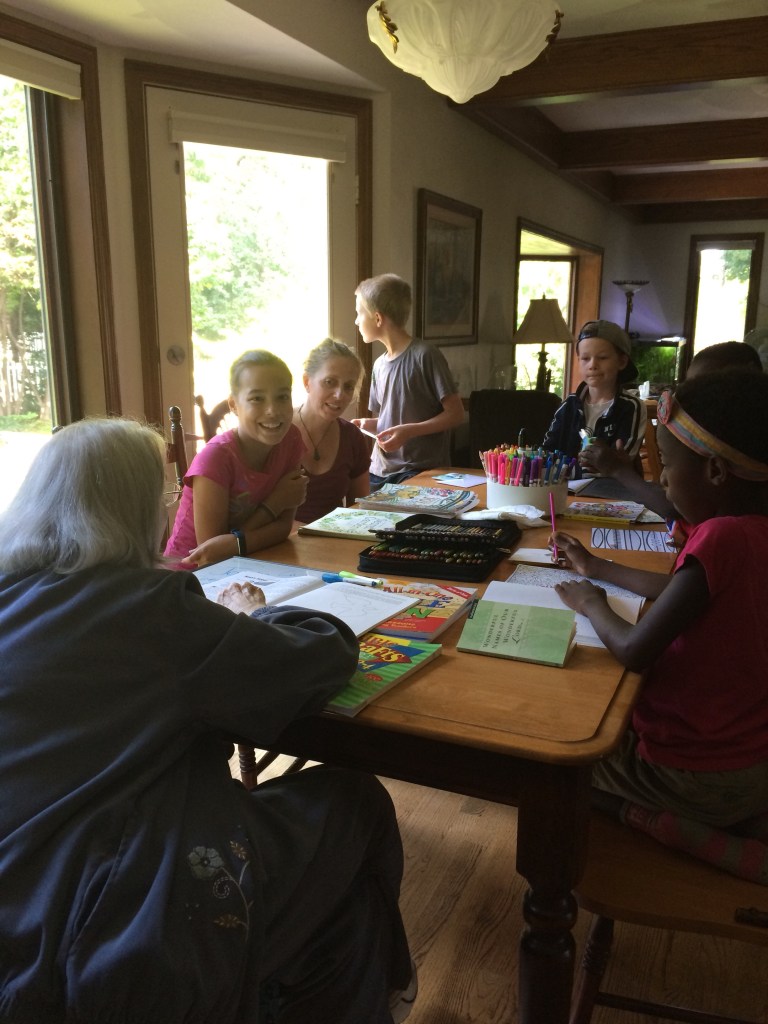
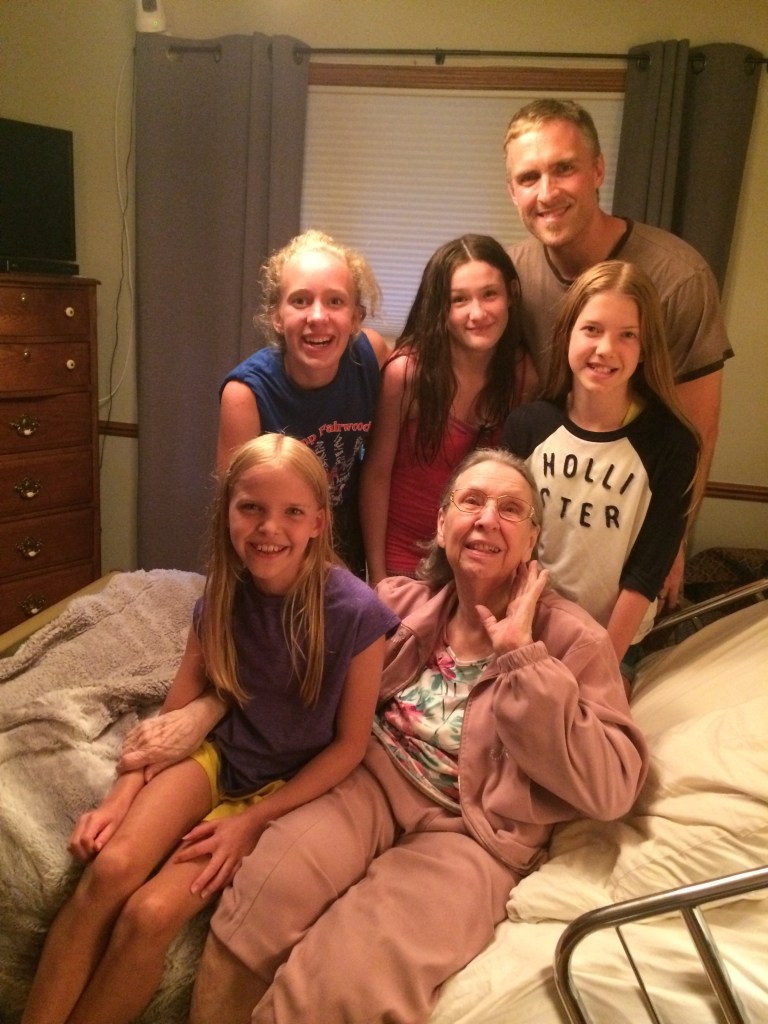
Her church family was fantastic – she loved the visits from her pastors and friends who would stop by. Her eyes would light up when her grandchildren (and especially her great-grandchildren) would come for a visit. One granddaughter would bring dinner and her family every Sunday night. One grandson came every chance he could, bringing his girls with him. All of the visiting grands and great-grands would spend time doing whatever she enjoyed: coloring, sorting colorful buttons, working a puzzle a half-dozen times, and such. My sister Vivian would come every other weekend or so to help me out, sometimes bringing her youngest son. Mom dearly loved her family, even if she didn’t always comprehend that we were her family.
My encouragement to fellow caregivers is to make sure you make room for family and friends as often as you can.
We rarely know when time spent with a loved one is the last time. Last times happen in life when we aren’t looking. Only God knows the measure of our days.
Tuesday’s Caregiving Tip: Keep a journal of those special moments with your loved one.
To my fellow caregiving friends who are still in the hustle and bustle of caring for a loved one with dementia, be sure to take time to write down those special moments. I wish I had kept an actual chronological handwritten journal, but am so glad I blogged and took photos…and posted cute stuff on Facebook.
I moved in with mom for a period of about 9 months. It seemed long and tedious in the midst of it, but just a tiny blip on the radar of life in retrospect. I’m glad I posted this fun memory on Facebook and hope it will bring a smile to someone’s face today.
This is the third in a series of posts inspired by an article from Alzheimer’s TODAY called Tiny Gifts That Are TREMENDOUS, where Mary Kay Baum shared a helpful A-to-Z list of caregiving suggestions Thus far, I have given you my spin on A-B-C and my thoughts as a caregiver regarding D-E. Let me invite you to join me this week for F and G as I share how these excellent tips have played out in my own caregiving journey.
Thus far, I have given you my spin on A-B-C and my thoughts as a caregiver regarding D-E. Let me invite you to join me this week for F and G as I share how these excellent tips have played out in my own caregiving journey. [Click here to read the original article].
Fear not if I take a break from commotion.
We were celebrating a birthday at our house. Mom sat at her place at the table and enjoyed watching the festivity and seeing a few of her great-grandchildren. Though she didn’t contribute much to the conversation, my heart was warmed by her smile as she watched the birthday boy bask in the attention. After the candles were blown out and the cake was served, mom quietly stood up with the help of her walker and then scootched down the hall the short distance to her room. She was done with company. And that was okay.
On a previous occasion, when mom was living in a senior apartment, the residents were hosting Trick-or-Treat for the neighborhood kiddos. During our city’s Trick-or-Treat hours the residents gathered in their activity room and waited for the steady stream of costumed guests. I thought mom would enjoy seeing all of the kids and handing out candy with all of the other seniors in her building. She stayed for a few minutes, then went back to her apartment; it was just too much for her. I had invited a few kids from church to come to the event. When they arrived, I invited them to visit mom in her apartment. Mom enjoyed the smaller gathering so much more.
During this phase of her journey with Alzheimer’s it became my mission to keep her engaged by inviting people to see her. One or two people would join us for lunch; another day someone might come over to say hi and work a puzzle or engage with her by sitting with her at the table coloring. One family from church brought us pizza for supper one evening, then stayed for a bit so the girls could sort through a jar of buttons with mom.
Go with me and others on quiet nature walks.
Truth is, in the later stages of dementia, most days it was nearly impossible to get my mother outside of the house for a little fresh air. It was a treat when it happened.
If the weather was nice and I could coax mom outside, I’d get her seated in a wheelchair and push her to our neighborhood park.
She enjoyed watching the children play at the splash park, seeing dogs being walked along the pathways, and would occasionally engage a perfect stranger in conversation.
We didn’t stay long, as the charm of our outdoor excursion would soon be replaced by the fear of being able to find our way home. By the time I got her back in the house, she had already forgotten our little trip. Even though it was forgotten, the benefits of the fresh air and the infusion of joy would linger in her demeanor.
One day, out of the blue, mom wanted to “check the mail,” so I let her go outdoors with her walker. She enjoyed that little trek down to the curb and back.
Since she was in a good mood, dressed decently, and it was nearly dinner time, we decided to put her in the car and go for a drive to the nearest Culver’s for supper.
She thoroughly enjoyed every bit of it…especially the frozen custard.
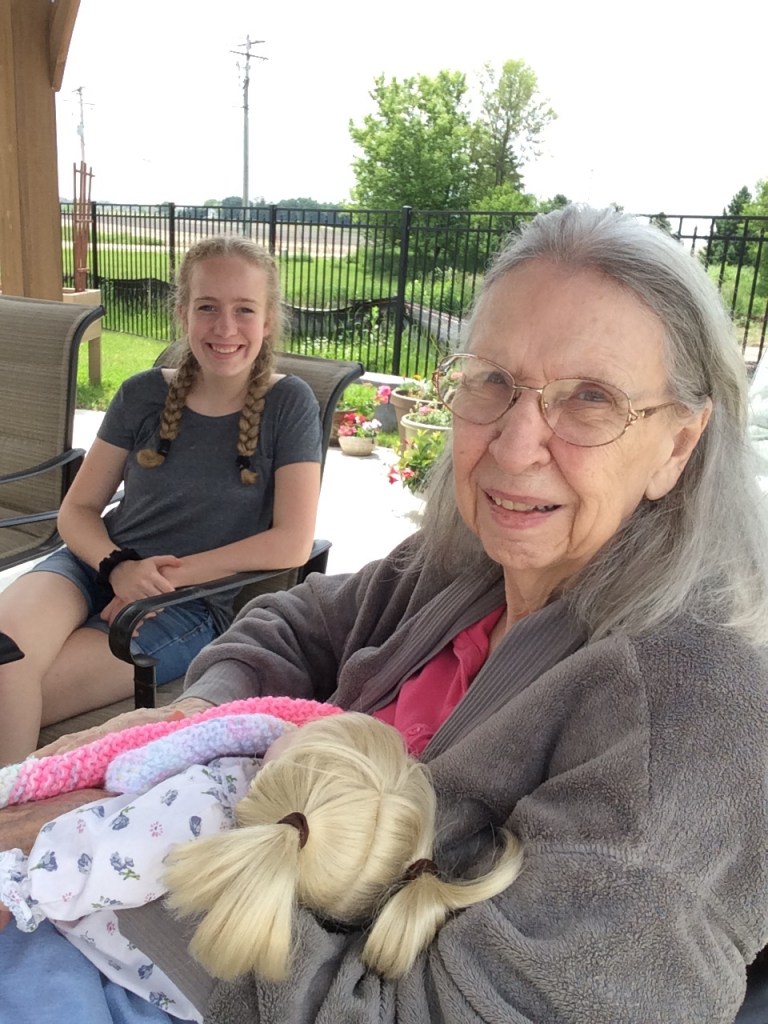
Once my mom made the move to assisted living memory care, getting her out of the front door was even more rare. This photo shows one of those sweet occasions when her great-granddaughter Violet managed to get her outside to sit on a shaded patio.
As Alzheimer’s continued its relentless march claiming bits and pieces of my mom’s brain, it was evident that mom’s world was shrinking right along with her memory. All too soon there came a day when the world outside of Mom’s front door became too scary of a place for her to venture.
That was the day when “go with me” became “be with me.”
Today I’m linking up with the Five Minute Friday community, writing for five minutes on a given word prompt. This week’s word is OBSERVANT.
My eyes followed the two women as they pushed a cart together through our local Aldi – the younger woman guiding and steadying the older. There was something endearing and precious about the scene…and personally familiar.
Even though my eyes are growing weaker with age (cataracts are forming, I am told), my eyes have become more observant in their ability to pick out the caregivers I encounter in everyday life. I believe this deeper level of awareness is one of the hidden graces of my personal journey in being an Alzheimer’s caregiver for my sweet mom.
Because I have been there, I see this loving daughter guarding her mother’s dignity as she slowly guides her through the store. My eyes see the mask of confusion in her momma’s eyes, and see the gentle way the daughter helps her mom choose groceries to put in their cart.
Because I have been there, my eyes see the caregiver in the waiting room of the dental office trying to convince their forgetful loved one that they just went to the bathroom and didn’t need to go again. I can show empathy because I remember that taking a loved one to the bathroom is not a 5-minute job.
Because I have been there, I see the caregiver in the parking lot trying to help their agitated and combative loved one buckle their seatbelt. I see and know the sheer exhaustion of it all.
My Alzheimer’s-aware eyes see the frazzled caregiver trying to go through the Culver’s drive-through as her daddy repeatedly unbuckles his seatbelt and tries to exit the vehicle. I see her anxious eyes in her rearview mirror as she waits to place their order. Tears are pooling there, ready to spill because she feels hopeless and alone.
May my eyes never be blinded to the needs of caregivers God places in my path. I pray God will help me see each caregiver through His loving and compassionate eyes.
If you’ve been following my blog for any length of time, you know I love to write about gardening and share some of the 4,987 pictures of flowers I have on my phone.
You also know that I cared for my mom in the last years of her life while she battled Alzheimer’s. I documented and photojournaled our journey on my blog (and a bit on Facebook too).
You may not know that I have also been overseeing the care of my brother who has significant medical needs, including a form of short-term memory loss called vascular dementia, due in part to unchecked diabetes.
Having both a mother and a brother with dementia weighs on me. Add a grandparent from each side of my family to the equation and every forgetful moment takes me to the edge of tears every time I forget something more significant than where I left my car keys.
Because dementia has struck so close to home, I have diligently sought to educate myself about the subject and have made it my goal to share with anyone who is interested any knowledge I glean or resources I discover.
I honestly think I have read nearly every book ever written for dementia caregivers. This book is my personal favorite.
If you check my Google activity log, you’ll know why the ads that pop up on my Facebook account relate to items specific to dementia care. I belong to two Facebook groups for caregivers. I even have a Pinterest board related to Alzheimer’s. I listen to podcasts and follow the blogs and Instagram feeds of others who write or photo-journal about Alzheimer’s and caregiving. I belong to a caregiver support group sponsored by Agrace, the hospice that helped take care of my mom in her final year of life. I have often surfed YouTube channels in search of information related to caring for someone with dementia.
Today I would like to share information from the YouTube channel of one of my favorite medical experts, Dr. Natali Edmonds, founder of a dementia support community called Careblazers. In this video, Dr. Natali discusses the various stages of dementia and the three most common tools for measuring where a loved one with dementia (LOWD) is in the course of their dementia decline. In my opinion, it’s the best explanation you will ever get in 13 minutes and 24 seconds.
If you are caring for a loved one with any type of dementia, I highly recommend subscribing to the Careblazer YouTube channel. Dr. Natali posts informative, compassionate, bite-size videos on most any subject a caregiver might encounter on their caregiving journey.

















 Barefoot Lily Lady