
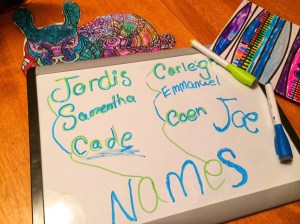
Eventually, with very few exceptions, all those afflicted with Alzheimer’s lose the ability to remember names. In the beginning stages, it’s an occasional inability to remember the name of a friend. Somewhere in the middle stages of this mind crippling disease, my mother began having more trouble with names. I noticed names scribbled in notebooks, on church bulletins, on 3″ x 5″ notecards, and backs of envelopes. It was her tool for hiding the fact that she was beginning to forget the names of her close friends.
Momma belonged to a group of ladies from her church who called themselves “The Lunch Bunch.” Each lady friend took turns choosing the destination for their culinary adventures. It was a sad day when Mom decided she could no longer meet up with her friends. She told me it was because the lunch venues were so far away. In retrospect, the unspoken truth was Momma was embarrassed she could no longer navigate driving to unfamiliar places. Even sadder and more difficult to admit, remembering the names of her closest friends was becoming impossible.
Our church family has become Mom’s surrogate church family now that she lives with us. My mother enjoys visits from her new friends, but is nervous about not knowing their names. To ease her transition toward knowing the names of these new friends, I borrowed an idea from a friend I’ve never met who lives in Yorkshire, England. A fellow caregiver to her own mother with mixed dementia, Heather and I “met” on Creative Carer, Heather’s Facebook page dedicated to inspiring and giving ideas to caregivers for those living with dementia. Our mothers seem to be travelling parallel paths in the progression of their individual journeys in the uncertain world of dementia. Heather is amazingly creative in her approach to caregiving, capitalizing upon her mother’s lifelong passion for all things artsy and crafty (you’ll also find many creative art therapy ideas on Heather’s blog here). As her mother’s memory began to fade, Heather created some laminated pages for her mum, depicting life events, useful information, and snippets of joyful events that had happened in her lifetime.
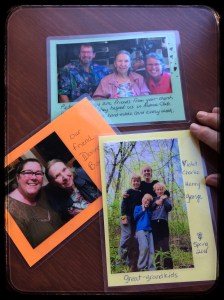
With Heather’s brilliant idea as seed thought, I made some little laminated photo cards mom could keep in her purse. Each card has a photo of friends and family who come to visit, with names written on the card and perhaps a little reminder as to how mom knows that individual or family. I love seeing Mom discover these cards in her purse. It’s a perfect sundowning activity for her, as she loves to go through the contents of her purse during her late-night purse rummages.
Whenever a new friend comes for a visit, I take a picture of them with my mom, then create a card for her before their next visit. About an hour or so before a guest’s next visit, I take that card out of her purse and show it to her. She really appreciates having the card as a reference.
Next project on the horizon: create a few cards featuring her childhood, family, nursing school and wedding. Memories from her early years are still relatively intact; these cards may help Mom tell (and retell) her stories to visiting family and friends willing to sit with her for a moment and listen.
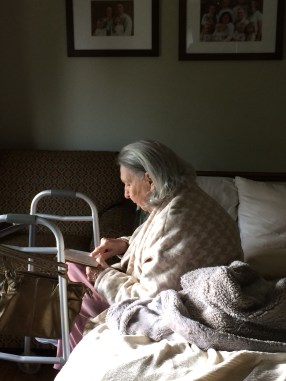 The familiar idiom, “waking up on the wrong side of the bed” usually refers to someone having a bad day right from the start. In Momma’s world of Alzheimer’s, it is entirely possible to very literally “wake up on the wrong side of the bed.” It’s interesting how a seemingly teeny difference of throwing her legs over the opposite side of the bed when she awakens will cause her day to begin awry.


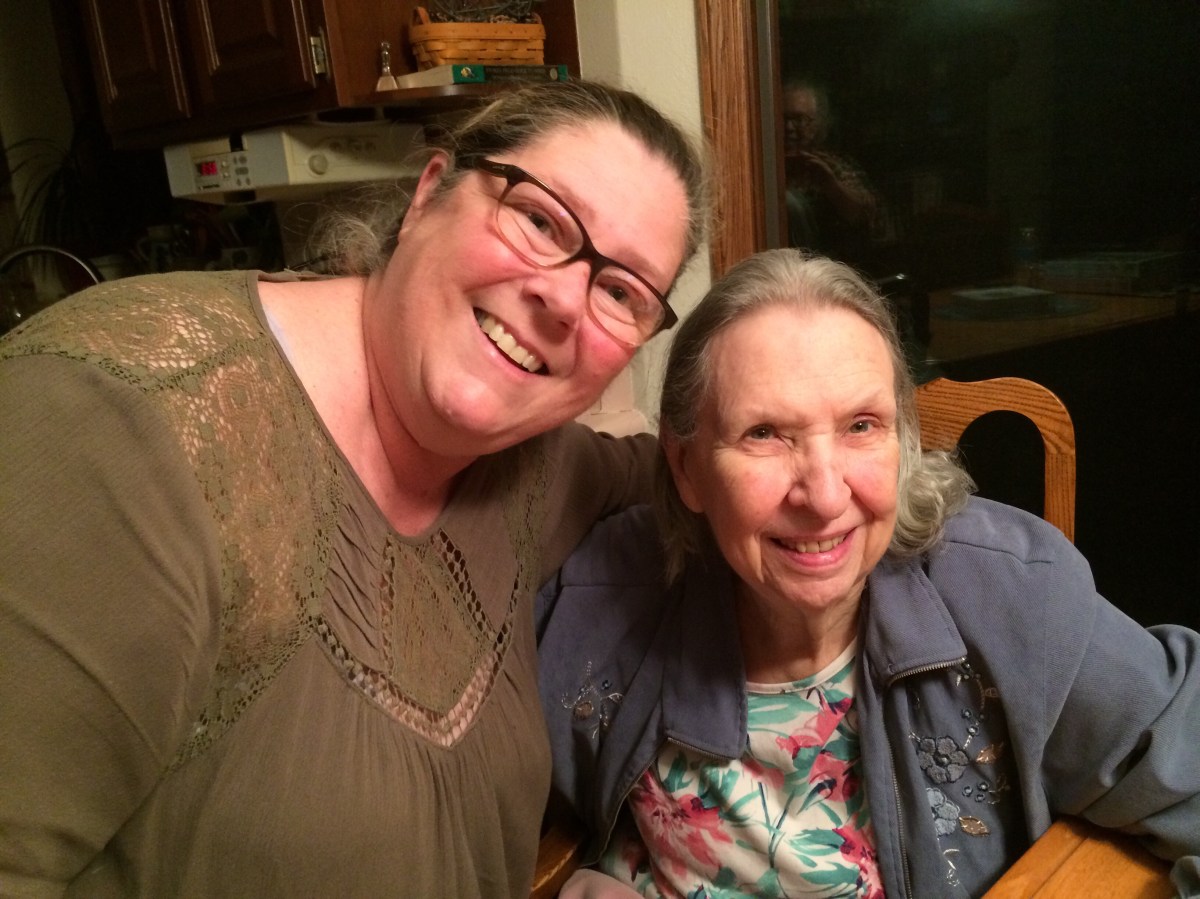


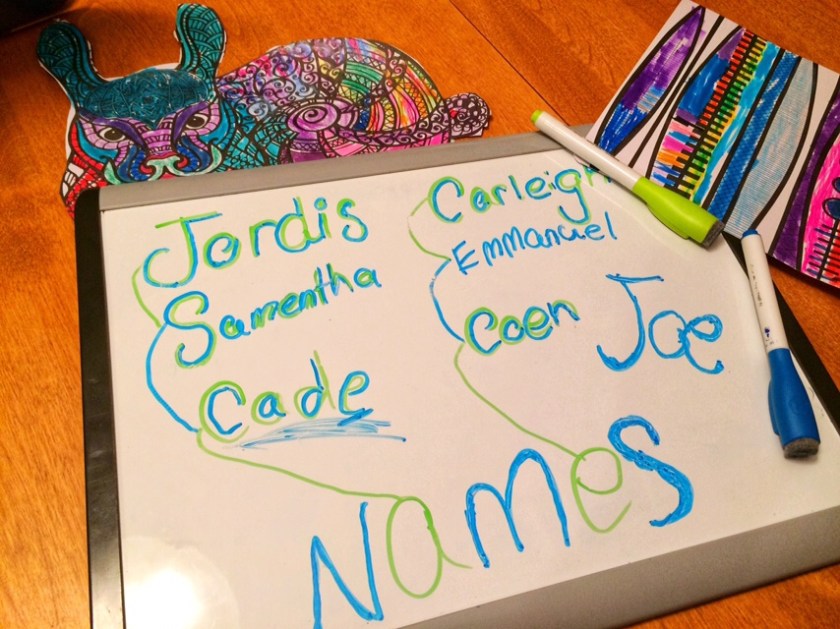 Momma loves it when guests come to visit, but is visibly agitated when she can’t remember their names, repeatedly asking, “What is your name?” Writing names on the whiteboard helps her relax a bit (name tags help too). If children are part of the mix, we have their parents prepare them ahead of the visit for the fact that Mrs. Boyles will ask them the same questions over and over again. Kids always seem to “get it” and are very patient and kind, talking loudly to her and flashing their big comforting smiles at her each time they answer one of her many questions.




 Most evenings Mom wants to help with the dishes. If it’s only a few plates, I’ll let her stand at the sink to dry. It makes me nervous though, because her legs are bowed and pretty unsteady, so we improvise a bit by bringing the dish draining rack to her place at the kitchen table. It takes three dish towels to do it this way: one under the dish drainer, one to use to dry dishes, and one to set the dried dishes upon. It does take more time than if I do it myself, but it makes my mother feel as though she is contributing to the household duties in a meaningful way. You can see contentment in her face as she helps, and that makes any inconvenience worth it all.
 My Facebook friends may remember this story. One day, not long ago, I left a cookie for my mom on a little white plate. Mom spied the treat on the countertop and gingerly carried it to her spot at the kitchen table. Everything in me wanted to help her carry it to the table. I let her handle this on her own, but stood nearby and at the ready should she need my help. Mom then plopped herself into her chair at the table. Then, in a sweet, melt-my-heart moment, I watched as she held the cookie between the fingertips of her prayerfully clasped hands, closed her eyes and quietly prayed,
 Barefoot Lily Lady