The Decline: Praying for Moments of Clarity

“Touch can reach through the fog, confusion, and fear of dementia. Reassuring touch grounds those who are spatially disoriented, bring people back to their bodies, and increases their awareness in present time and space. One touch can affirm that they are not alone and they are valued by the person who is beside them.”

Teresa Stecker, R.N., Hospice Nurse, excerpt from Creating Moments of Joy Along the Alzheimer’s Journey, by JoLene Brackey

Following mom’s recent and very life-altering stroke, I wanted to make sure my sister Viv would be able to share some special time with our mom. Between the restrictions related to COVID-19, my sister’s work schedule, and her car that needed tires and brakes, Viv hadn’t been able to see mom, and I felt time was running out. I phoned Viv and told her that I thought mom would be going Home to heaven soon and encouraged her to visit if she could.

In an effort to prevent the spread of COVID-19, visiting a loved one in a care facility was limited to window visits. But there was an allowance for residents who were in end of life or needed “comfort care.” Mom had been under hospice care for quite some time, but had now officially transitioned to end of life care, so family was permitted to gather as long as certain precautions were taken.

Viv didn’t have reliable transportation, but said she could come on Wednesday when her daughter would be able to bring her. In my heart, I was worried that mom wouldn’t make it until Wednesday, but didn’t want to burden Viv with trying to pressure someone else to bring her or tempt her to drive a car that was not roadworthy. By Tuesday, Mom was sleeping a lot and had completely stopped eating and drinking, so I prayed that Viv would be able to make it in time and that she would find a measure of peace for having been here.

I noticed that mom was a tiny bit more alert in the minutes immediately following being changed and turned, so requested that her caregivers do her daily cares shortly before Viv was scheduled to arrive at 1 pm. They say that when a person is in the end stage of life there is often a rally, or a short time of clarity. I hoped and prayed Viv would get one of those moments.

Mom was weak and groggy when Viv and her daughter Jessie arrived, but she had her eyes open and was more talkative than she had been since her stroke on Sunday. Viv lotioned mom’s hands while she visited, which was something that seemed to be very soothing for mom. Mom started talking and tried to tell her, among other things, that her arms and mouth didn’t work anymore.

It was the moment of clarity I had been praying for. My heart rejoiced seeing God’s answer to prayer as they had that little moment together.

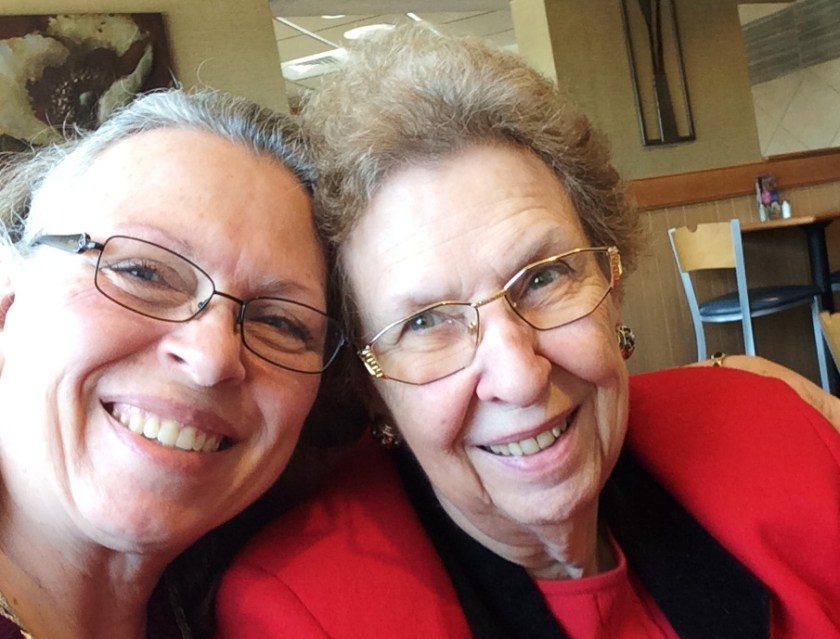
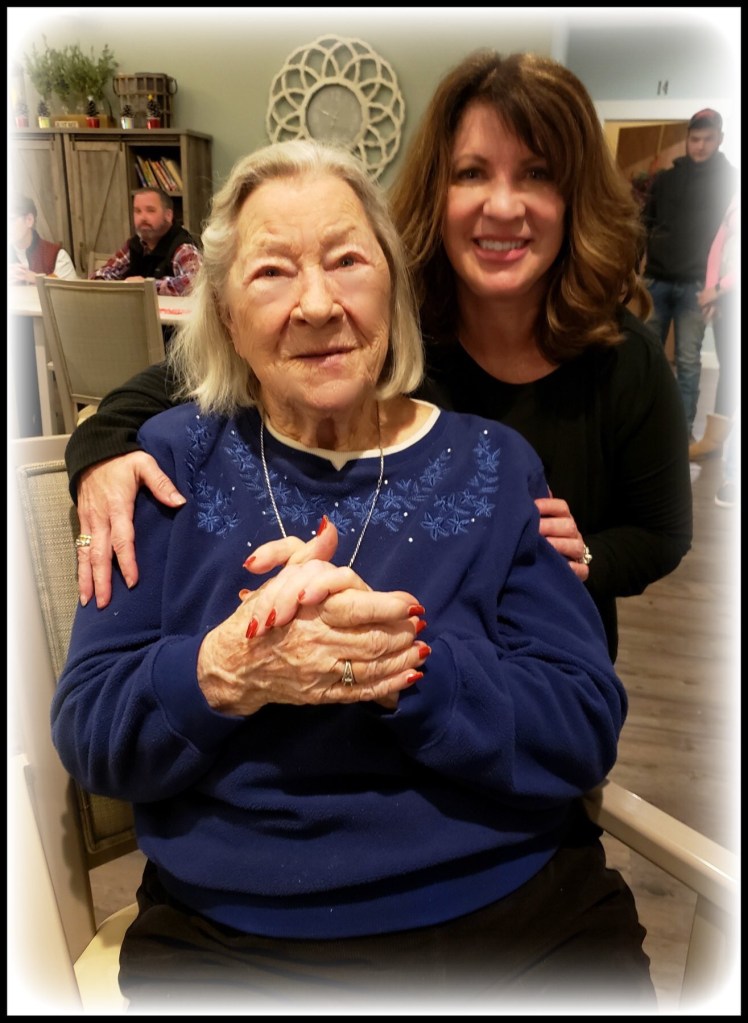
May 20, 2020 – A weak, but sweet smile from Momma, pictured here with her youngest daughter Vivian and youngest granddaughter Jessica.

If we were having coffee…

Today I am imagining that we are enjoying a cup of coffee (or your favorite beverage) together. In my imaginary coffee klatch, you are asking me a few really good questions. Let me share with you how I would probably answer those questions.

“What things did you like best about having your momma in assisted living memory care?”

  • I was blessed to be able to sleep at night (all night).
  • Momma had more than one pair of eyes keeping an eye on her when she struggled with sundowning and couldn’t seem to stay in bed all night.
  • Momma was safer. Yes, she would fall, but she would fall at home too. At BeeHive she had more than one person available to help her get up again and a whole team of people assessing whether or not she was hurt.
  • I slept in a peaceful and quiet house. There was no longer the need to listen to a video monitor’s static hissing at my bedside as I drifted off into never-long-enough sleep.
  • There were no more bleary-eyed trips to her room in the middle of the night to help with toileting, clean up accidents, change clothing or bedding, or try to reassure her that she was safe from the imaginary people she would see lurking in the shadows at night.
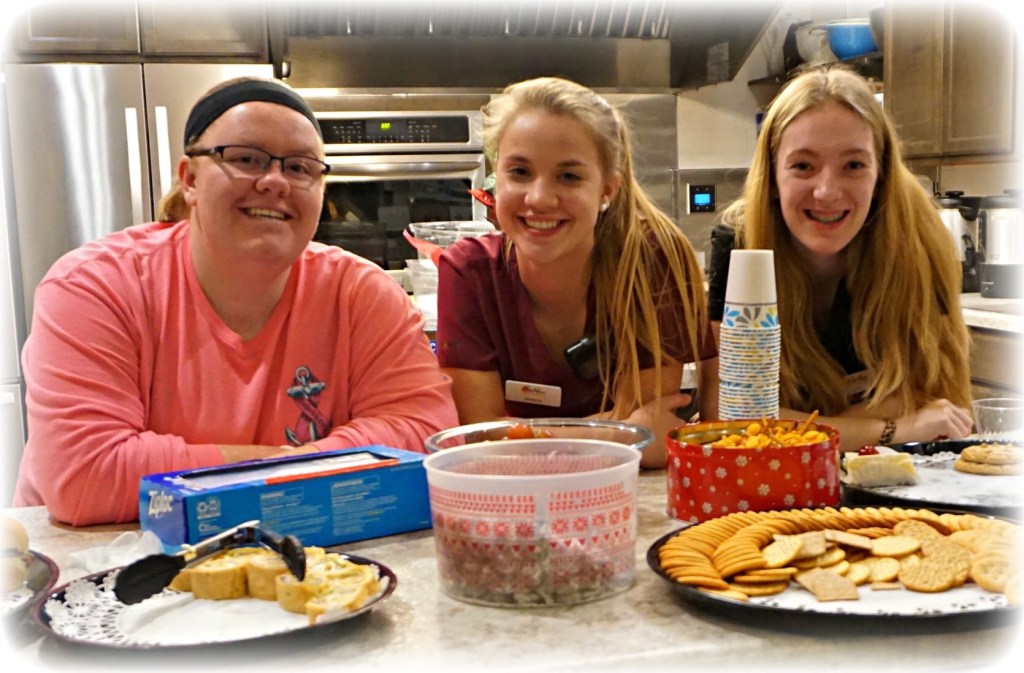
Just a few of mom’s incredible caregivers

“What did you miss the most about being a caregiver once your mom was at BeeHive?”

  • I would tell you that even though I no longer had the responsibility of caring for her 24/7, I was still her caregiver. While some caregiving loved ones seemed able to separate themselves for a few days at a time, I found myself visiting my mom daily, providing care in the following ways:
    • Sitting with her at lunch to better ensure she would eat something without wandering away from the table.
    • Being visibly present for a few hours of her day.
    • Being her advocate. I communicated on her behalf with the staff at BeeHive, the nurses and doctors, and the hospice workers.
    • I simply cared for her by making sure she had everything she needed to be comfortable.
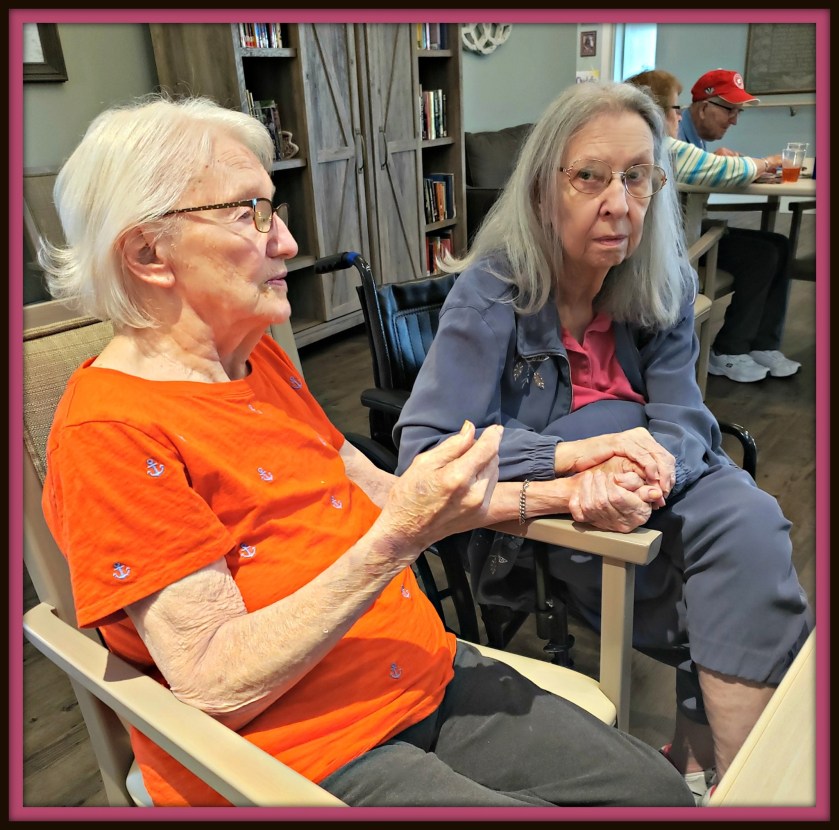
Momma had some very sweet friendships at BeeHive.

If you had to do it over again, what would you do differently in caring for your mom?”

I’d probably tell you, “Not much.” Each step of the journey with my mom was prayerfully taken. Decisions I needed to make were made with the help of God and those who love me best.

“What do you want your children to do if they someday have to deal with you having a diagnosis of Alzheimer’s too?”

I would tell my children …

  • Re-read my blog. I wrote it for you. You might find some helpful insights there.
  • Don’t be afraid to ask for help. Be specific about what you need.
  • I want you to feel comfortable making the decision to entrust my care to a place like BeeHive sooner, rather than later. Even if I protest at that time, it will be okay. It will be good for us.
  • Even if you’re not there every day, please don’t forget to visit me.
  • But most of all – even if I’m unable to remember who you are, I love you very much and always will.

Turning the Last Page

From the moment I arrived at BeeHive, it was apparent to me that we would be experiencing the final chapter of Mom’s remarkable sojourn on earth. The stroke had dealt a crushing blow, adding further injury to Alzheimer’s furtive chipping away of her mind and body.

I will forever be grateful to the staff of BeeHive for graciously allowing me to stay at my mother’s side during her final days. It was a hard week, filled with opportunities to be a comfort to my mother, and moments both endearing and bittersweet. My overnight vigil afforded a rare opportunity to observe the night shift at work, deepening my appreciation for those dear ones who watched over the residents at night.

On May 24, 2020, a beautiful Sunday morning, as I held her hand in mine, the final page of Momma’s life was quietly turned. My sweet mother’s story on this side of Glory ended just as I hoped and prayed: Alzheimer’s lost and God won as He called her gently Home to begin the story that never ends.

Reading the Last Chapter

If you’ve read my blog for any length of time, you may have noticed that I have been candidly sharing what is happening in my mom’s world living with the diagnosis of Alzheimer’s. The story has been a few years in the telling; parts of her story are not easy to tell, other parts are sprinkled with joy and little bits of humor. The part of her story that we are in right now is very hard to write about, but telling her story has been important to me because I know there are others traveling on this path and perhaps our experience can shed a little light on the path of those traveling behind us, and comfort and companionship for others.

In addition to blogging about mom’s story, I have been finding great comfort in listening to audiobooks while on this somewhat solitary part of mom’s journey Home. Books are great companions. As a wanna-be writer, I enjoy seeing how various authors tell their stories, develop characters, and weave their story lines. One of my friends likes to jump ahead to the last chapter of books and read how the story ends before she decides whether the book is worth reading. If she likes how the story ends, she’ll read the book. She explains, “Knowing how the story ends doesn’t ruin the story for me.” For my friend, there is enjoyment in knowing where the plot is headed. She loves noticing how each character is introduced and how the little twists and turns in the story line fit into how the story will ultimately end.

A phone call I received on Sunday night makes me feel like I’m about to skip ahead in mom’s story. My phone rang at 7:09 pm and lasted only one minute. The call was Kate from BeeHive calling to tell me that they believed my mom had suffered a significant stroke. Kate’s voice was filled with compassion. She didn’t have to say it, but we both knew that this new twist meant that we were most likely in mom’s final chapter of life.

I told Kate I would be there in a few minutes and then hurriedly tossed a few changes of clothing in my backpack, grabbed my Bible and my favorite pillow, then headed toward BeeHive.

I am so thankful I already know the end of the story. Alzheimer’s loses. God wins.

The Decline: Falls & Playing on the Floor

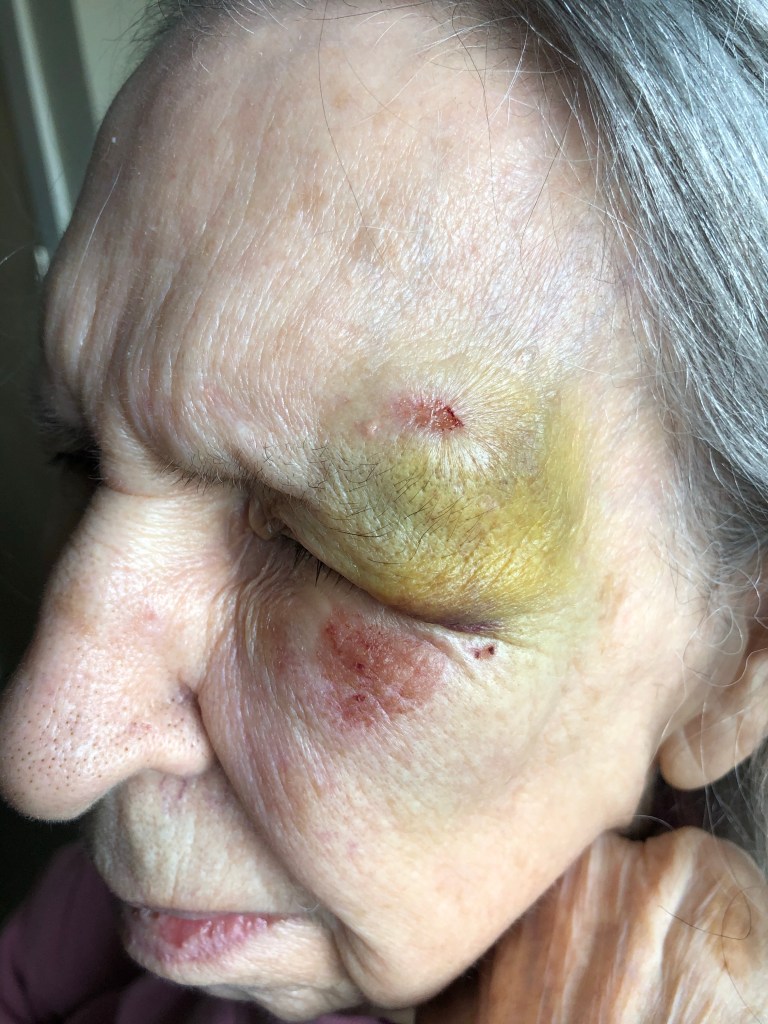
My poor mom! She’s got quite a few nasty facial bruises and abrasions sustained in recent falls. Let me be quick to say that my mom receives EXCELLENT care in her abode at BeeHive. None of the falls she has experienced have anything to do with her not being closely monitored. The staff does their best to keep an eye on her, and so do I.

Case in point: earlier this week I was just a few feet away from her when she suddenly decided she was going to attempt to transfer herself from her wheelchair to a nearby recliner. She ended up unceremoniously dumping herself onto the floor in the process. Thankfully, she wasn’t injured this time, but that just demonstrates how quick and stealth-like she can be when she sets her mind to doing something.

Much thought and effort goes into “how to keep Charlotte safe” at BeeHive. I surely appreciate the staff’s diligence, their willingness to keep tweaking medications, schedules, and processes in order to create an environment where she is as safe as possible. I make every effort to work with them and support them in their endeavors, and her team of caregivers is always more than willing to give my ideas a try.

I know some of the readers of my blog may be experiencing similar difficulties with their loved ones, so thought I’d share a few things we have tried which seem to help.

A floor alarm is in use by her bed, which helps the staff know when her feet hit the floor. She also has a wheelchair alarm which will alert them if she lifts her weight off of the chair. Unfortunately, alarms only let you know that the loved one is already in motion and caregivers may not be near enough to respond before the incident occurs. The greatest strength of an alarm is that it brings help sooner than later.

Learning her habits and “reading” her signals is a very important part of anticipating her risky behavior. For instance, they know that mom can no longer reliably sense when she has to use a toilet, and her ability to voice a need to “go” varies greatly daily. However, through observing mom and recording her habits, they know that it is wise to wait about 45 minutes after lunch when she’s getting a bit sleepy to take her to use the restroom, and then put her in bed for an afternoon nap.

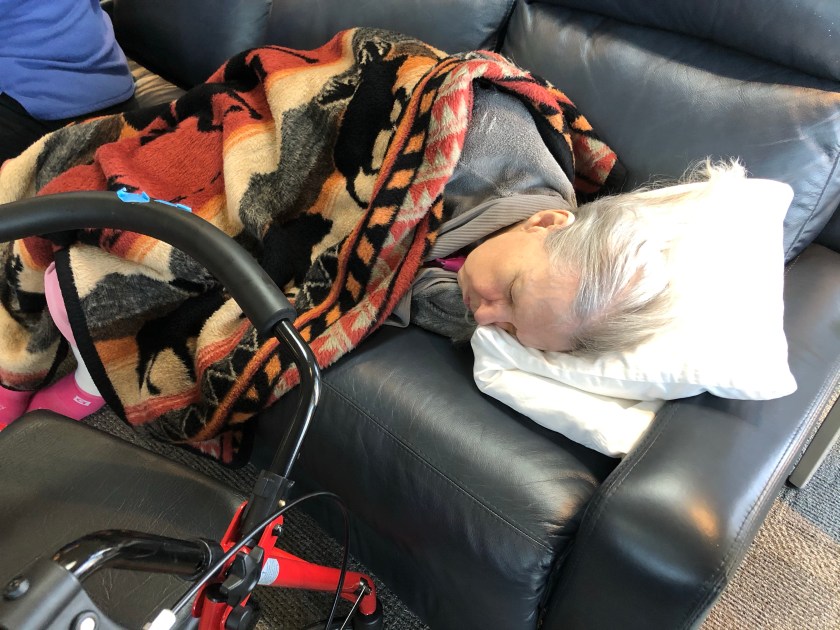
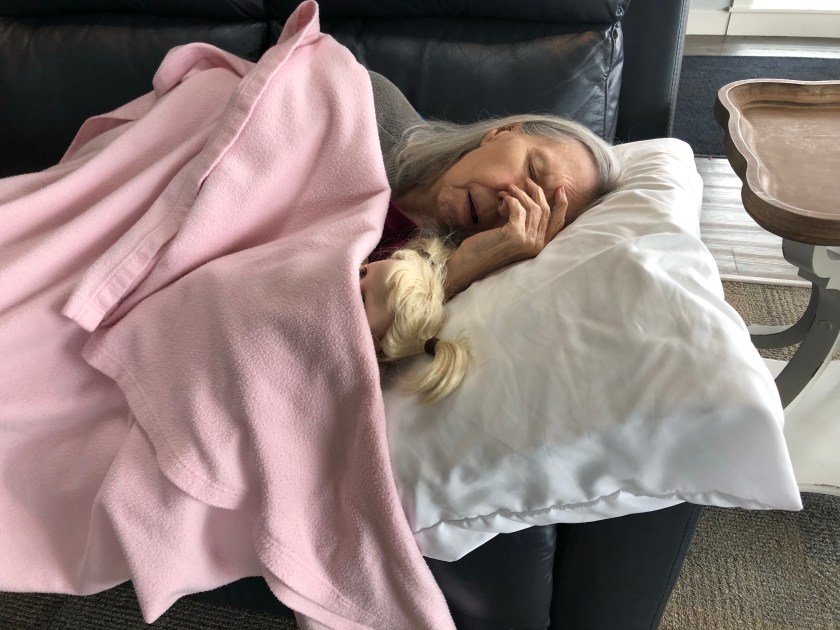
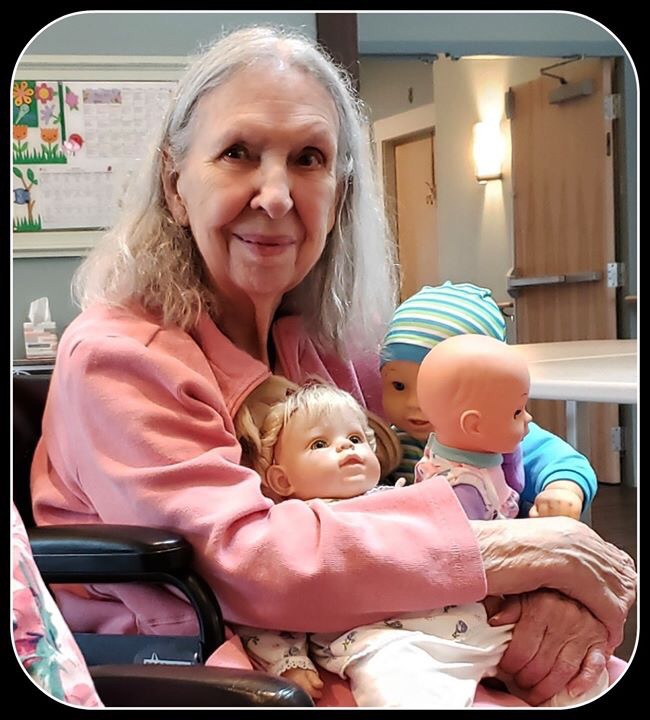
Mom likes to tootle around in her wheelchair, but can get into a bit of trouble as she explores the rooms of other residents and tries to get in their beds or chairs. Restraints aren’t allowed, but her caregivers have learned that mom will stay put and sometimes take a quick nap if she is placed in one of their comfy recliners (and reclined). She also likes to sleep on one of the roomy couches; if she seems sleepy and is trying to transfer herself to a couch, they help her get comfy by bringing her a blanket and pillow. Dolly sometimes joins her for a little snooze.

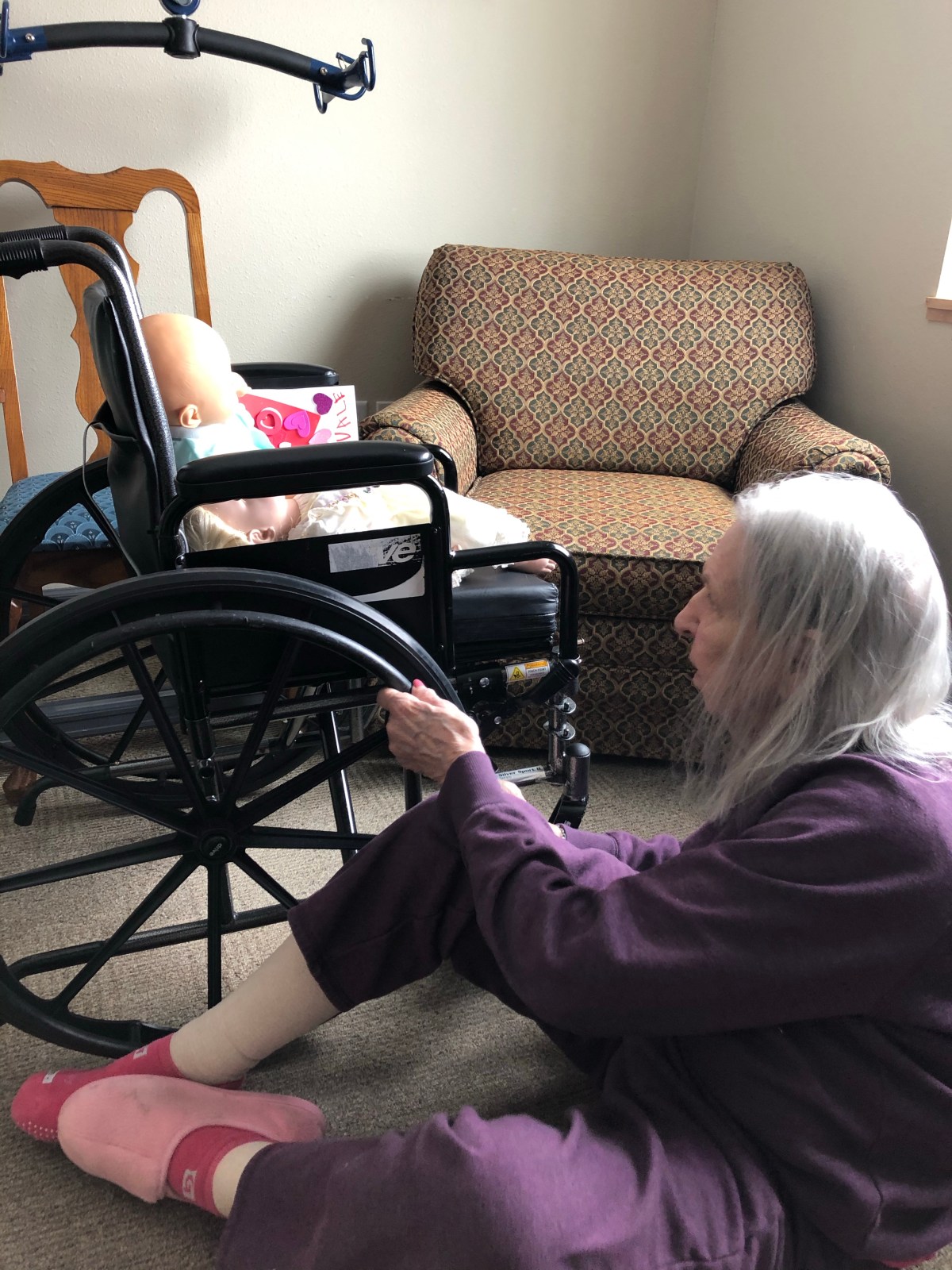
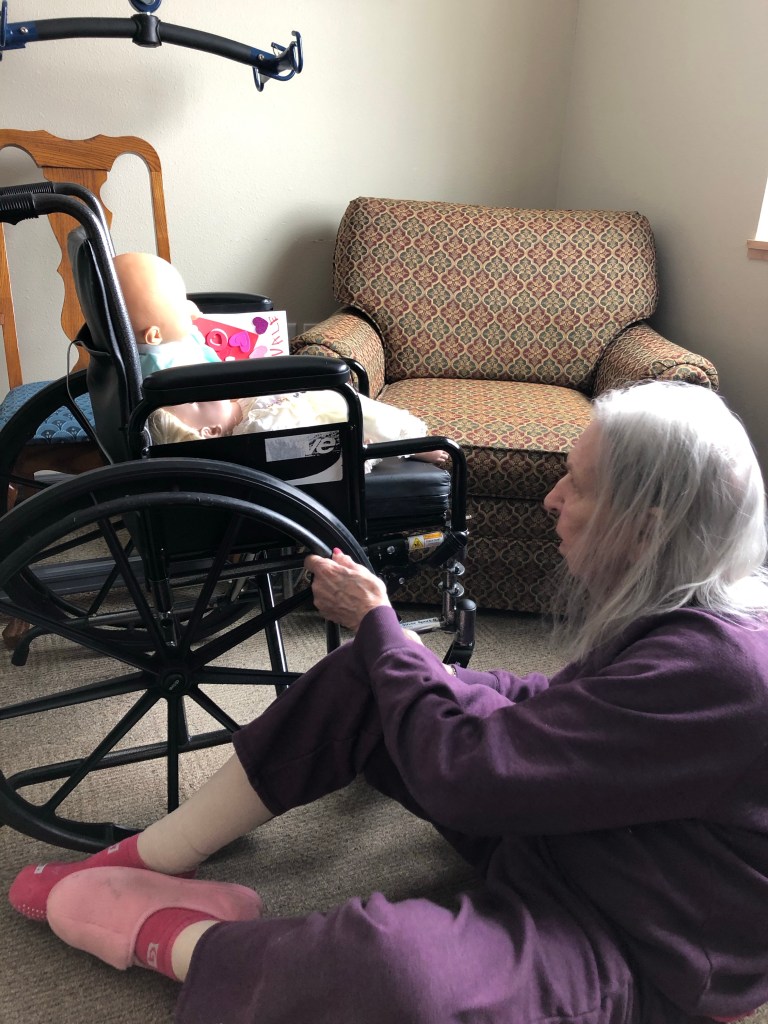
Mom’s risk for falls is complicated by the fact that she seems to enjoy being on the floor. Sometimes she is playing on the floor like a small child, inspecting the wheels on her wheelchair, or scootching around on her bum in a crab-like crawl (see the sassy video below). Other times she just wants to sleep on the floor. It’s HOW she gets down onto the floor that is risky and causing her injuries (that and falling asleep in her wheelchair and then toppling out). If the staff sees her attempting to get down on the floor, they have learned she will become agitated if they keep picking her up and putting her in her chair or bed. It truly is best to help her get down there safely and let her hangout down there until it’s time for the next meal or activity.

As you can imagine, the sight of a frail-looking, elderly sweetheart crawling around on the floor is a bit disturbing to visiting family and guests who sometimes assume that the staff is just not paying attention.

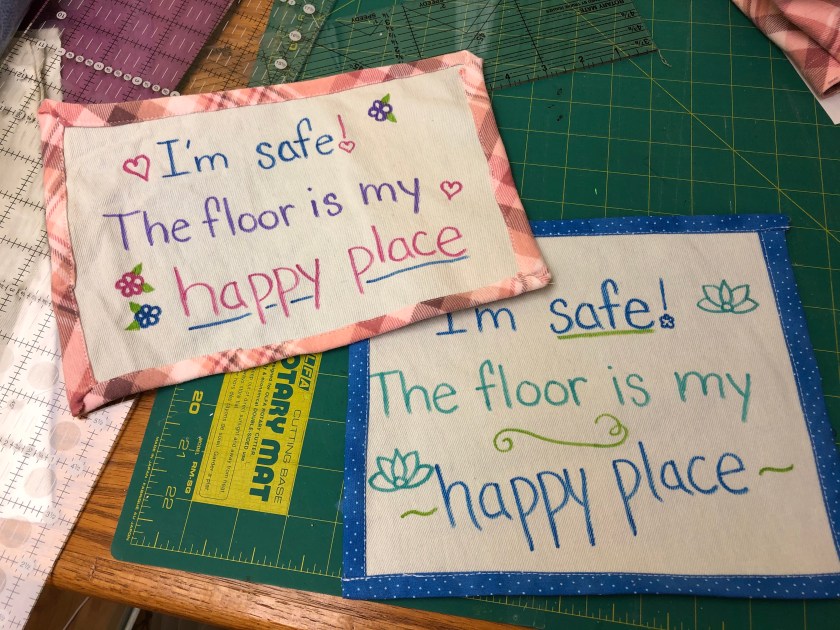
To keep the staff safe from undue criticism, my granddaughter Mia helped me decorate a few little fabric signs for her back which help communicate that she is safe and happy. The staff pins the little signs to her sweater so she can play to her hearts content and everyone knows she’s okay.

Mom’s ability to communicate her needs is definitely on a course of swift decline. I know I say this a lot, but I am incredibly grateful for those who lovingly care for my mom. I couldn’t possibly meet mom’s needs as well and keep her safe if I were caring for her on my own. How wonderful that, through BeeHive Homes of Oregon, Agrace Hospice, and Bluestone Physicians Group, I have doctors, nurses, nursing assistants, personal care workers, a cook, a pharmacist, a social worker, and an activity director who ALL care about my mom so very much.

Mom is safe. I am blessed.

The Decline: When Birthdays Are No Longer Celebrations

Mom turned 86 years old yesterday. I think I have been saying this for three years, but I honestly believe this may be the last birthday she will celebrate on this side of heaven. Nonetheless, I baked a cake especially for her and brought it to share with her friends at BeeHive.

I didn’t remember to take a picture of my cake, but found this photo and a recipe similar to mine.
Photo credit: https://www.keyingredient.com/recipes/3782245034/ding-dong-cake/

In my heart, I knew the birthday cake probably wouldn’t matter to her. But it mattered to me. My mother’s life is worth celebrating.

As expected, she enjoyed eating the cake, but her birthday didn’t phase her. She didn’t seem to understand or believe it when I told her it was her birthday, and the greetings of her friends and caregivers were met with disbelief and a blank expression. She looked quite confused (and maybe a little mad at me) while her friends and caregivers sang ‘Happy Birthday’ to her after lunch. She didn’t want to blow out the candle on her piece of cake, but she enjoyed eating the cake.

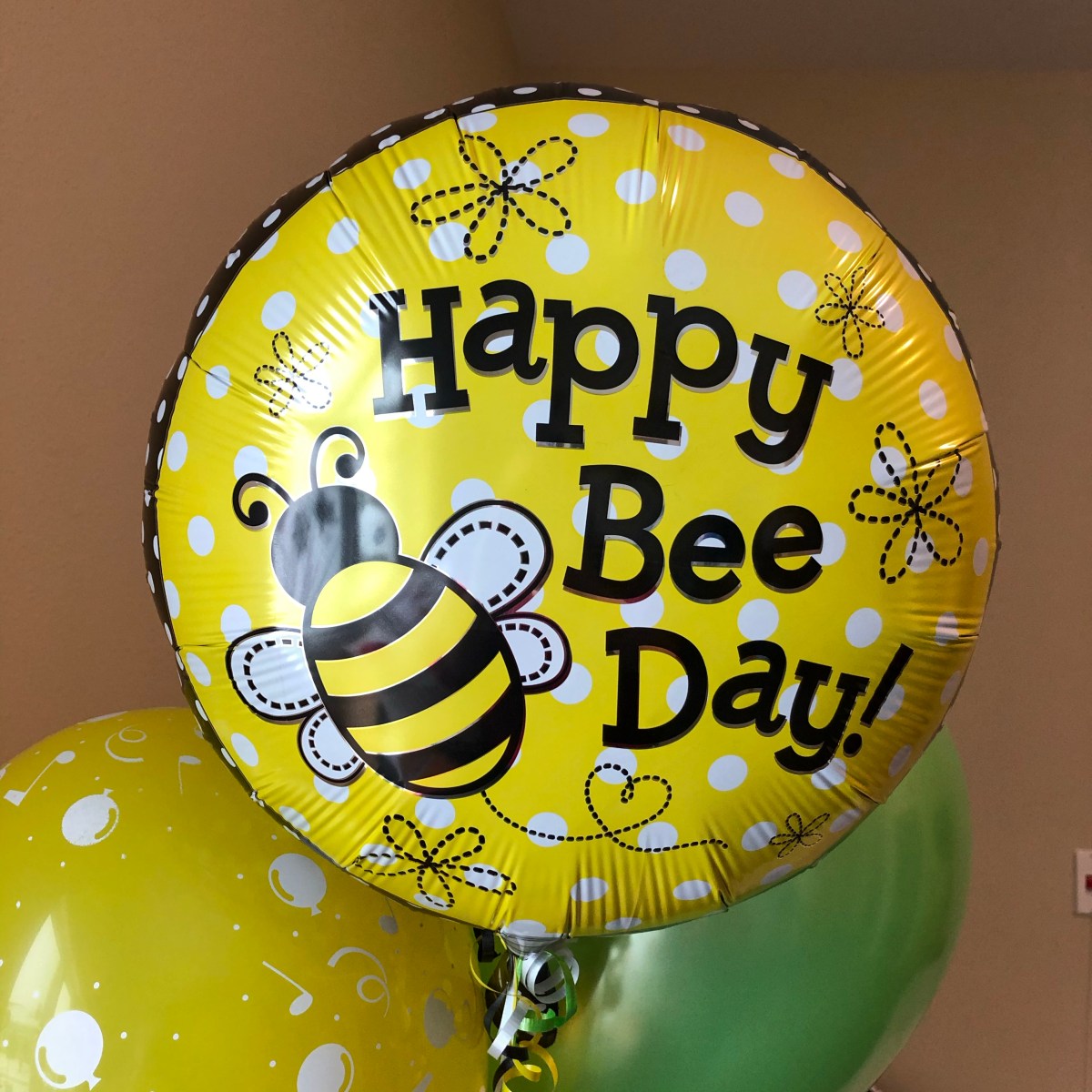
She didn’t want to open the cards from friends and family, or the present her brother sent her. She didn’t seem aware of the sweet gift of balloons and a cute little teddy bear that one of the staff purchased for her – but I basked in their love for her on her behalf. I opened the cards and gifts for her and set them up where she could see and hopefully enjoy them.

The birthday display didn’t seem matter to her, but it mattered to me. My mother’s life is worth celebrating.

As we sat in her bedroom that afternoon, she would talk to me, but her eyes would be closed, or open just a tiny sliver. She would scootch around in her room a bit in her wheelchair, but with eyes closed and directionless. I could tell she really wanted to go to bed and sleep, so I asked the staff to help me get her in bed.

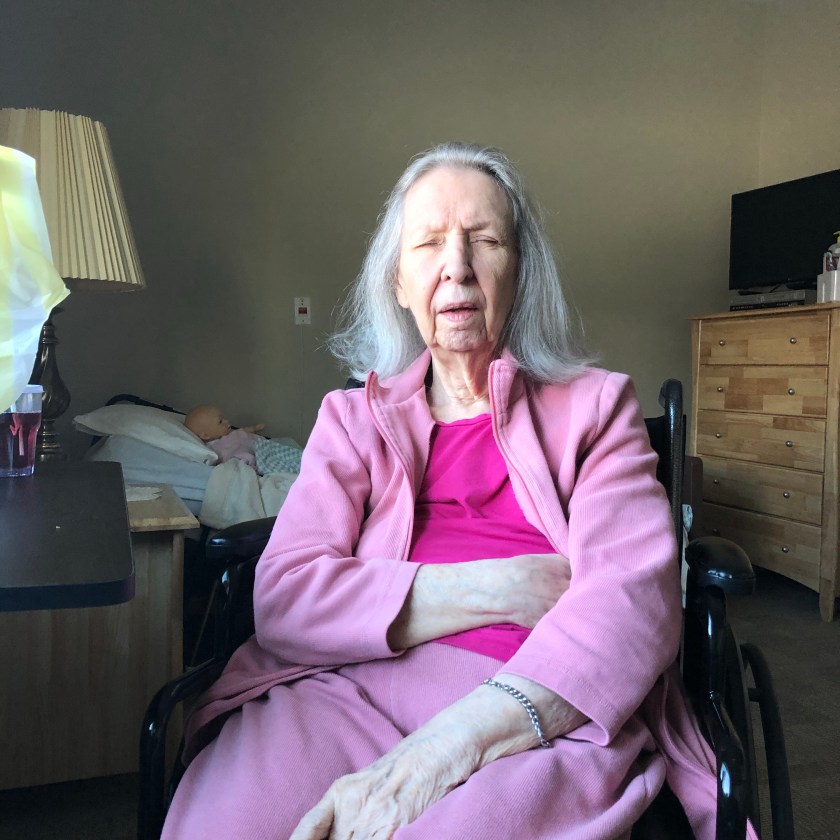
Mom shuts her eyes to her world when she is talking

Today was the first day the staff needed to use a Hoyer lift to help her get out of her wheelchair and into bed. The fact that it was her birthday wasn’t lost on me. This contraption is a gift; a gift which will keep mom safer as she transfers. This gift will also keep those who care for her safe from injuring their own backs as they assist her. Part of me wanted to cry knowing that mom was at the stage of care where this device was even necessary; but the other part of me smiled knowing that it was a blessing.

As I celebrate this woman’s extraordinary life, I pray for those who are caring for her. They are a blessing to me, and a gift worth celebrating too.

Taking Mini-Breaks for Creativity

I have all sorts of excuses for why I’ve been a little hit-or-miss in the blogging department. The best reason I can proffer is that I’ve been taking little breaks for a bit of creativity of a different sort.

First up, a very special sewing project. My son sent me a text one night asking if I would make a Christmas stocking for a teen who is staying with them. I had made a stocking for each of my grandchildren prior to their first Christmas and he was hoping Danni could have a similar stocking too. I was so very glad he asked because I had it in my heart to do something for her, but wasn’t sure what she would enjoy. This would be fun!

Continue reading “Taking Mini-Breaks for Creativity”

Making Memories

BeeHive is the name of the wonderful assisted living memory care where my mom lives. On Thursday evening BeeHive certainly lived up to its name with the buzz of excitement as families and friends of the residents and staff gathered at the hive for a Christmas party.

The gathering had all the makings of beautiful affair with great food, fantastic music, a little dancing, and opportunities to meet and greet the loved ones of the 16 residents I have come to love.

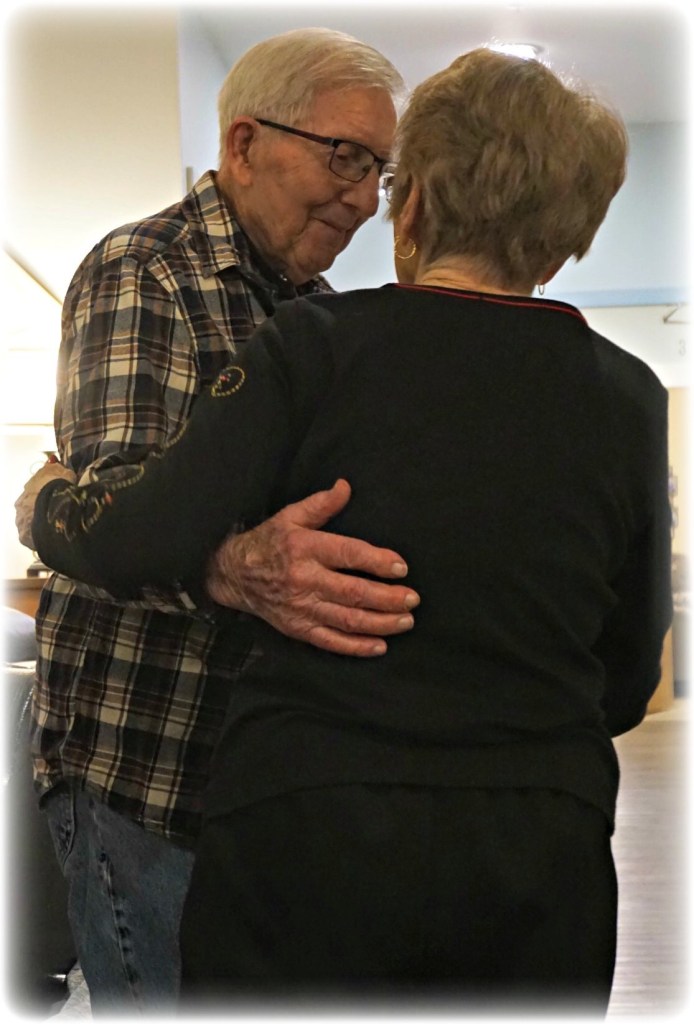
Momma couldn’t hear the fantastic music because she is really hard of hearing, but she had her fill of snacks and pleasant conversations. I think she and Dolly enjoyed themselves. They retired early, as crowds aren’t their thing. As is the way with Alzheimer’s, Momma won’t remember a thing about the party in the morning.
Sometimes there is only joy in the moment for our loved one, and memories we make together are ours alone to cherish and remember.

[Please watch this video if you’d like to learn more about BeeHive Homes of Oregon, WI.]

Aphasia: Word Salad

Momma still likes to exercise her own independence when moving about. It is her right to do so, but it does sometimes result in a fall. Momma had a “doozy” of a fall a few months ago. No one is exactly sure what happened; they just heard her calling “help me” and found her lying on the floor on her side, trying her best to right herself. Thankfully, with a little help, she was able to get back into bed without emergency intervention. In the days following, she was sore and showing signs of having bruised or fractured her tailbone and ribs. I opted not to have her x-rayed, as the results might give us a diagnosis, but would not change the treatment plan. At this stage in her illness, Momma’s plan is for comfort measures only.

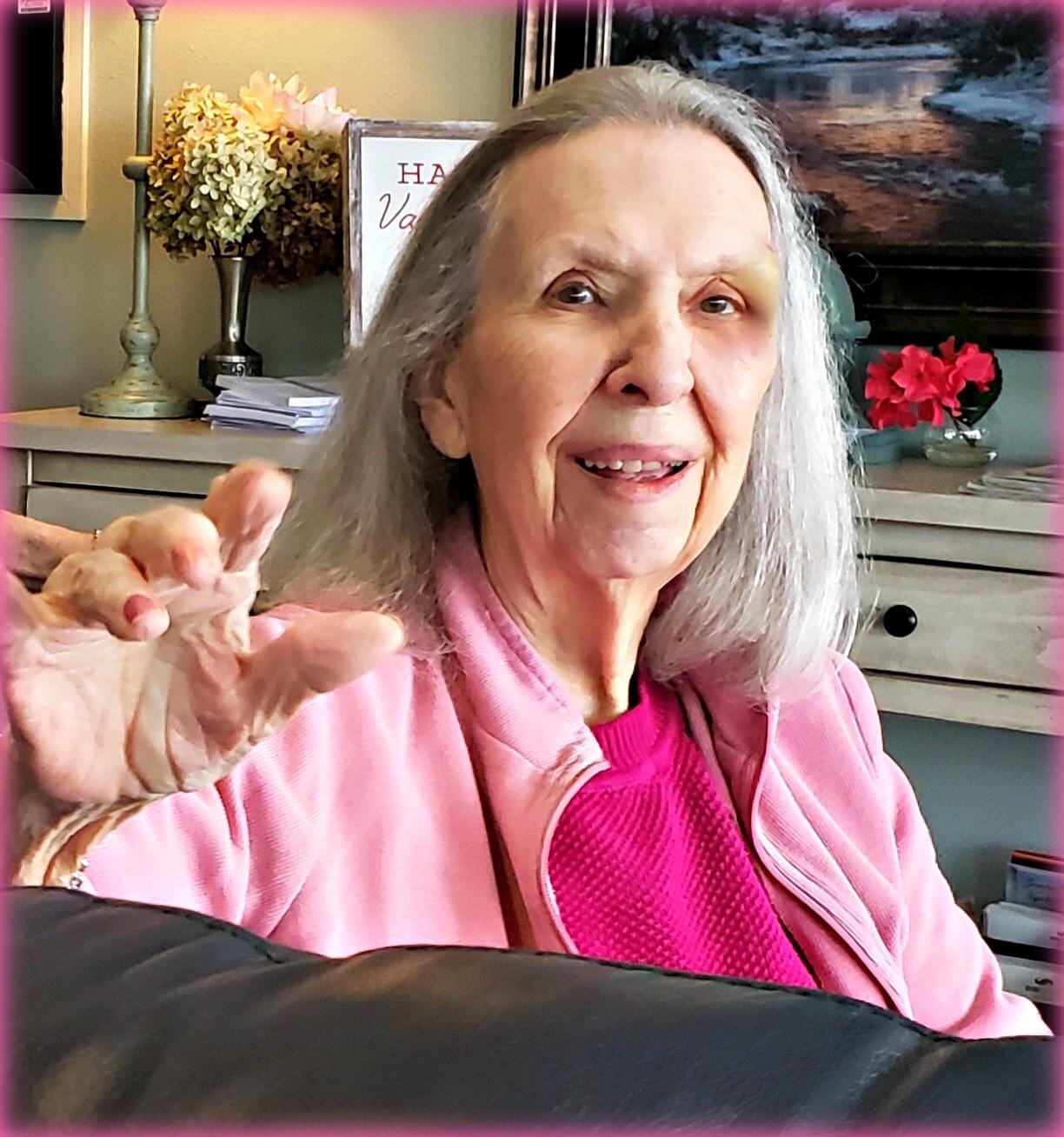
Momma (and Dolly) sleep quite a lot these days.

Mom was in a considerable amount of pain following the incident. Hospice recommended we start giving her some stronger medication to help manage the discomfort and quiet her anxiousness. A low dose of morphine was started, but wasn’t particularly effective; plus, mom seemed to have an allergic reaction. Once switched to hydromorphone, she was very sleepy, but pain was much better managed. Before long, Momma was back to tooling around in her wheelchair visiting with the other residents and “borrowing” seemingly abandoned baby-dolls and stuffed animals to care for in her room. That was the “upside” of administering narcotics.

The “downside” is that narcotic medications cause constipation. With an injured tailbone, constipation can become a formidable and painful foe.

Another “downside” is that the medication also makes her more confused – so much so that her speech comes out in an incoherent, rambling, jumble of meaningless words and random thoughts. This confused speech is a condition known in the world of dementia as aphasia and is often referred to as “word salad.” Usually a symptom first noticed in earlier stages of the disease, aphasia makes finding the right word very difficult. It grows progressively worse as the disease marches on, complicating oral and written communication, making interpreting someone else’s words in a conversation or reading a sign frustratingly difficult.

The most frustrating “downside” is non-stop chatter. Usually fairly quiet and non-conversational at the dinner table, the medication caused Momma to talk non-stop. She barely came up for air between one string of jumbled words and another. Mom’s usual table mates at lunch grew very weary of her nonsensical babbling, with one of them growing impatient enough to take a frustrated swipe at mom then slam her fist down on the table demanding, “Please! Someone just make her be quiet!” Thankfully, the impatient neighbor (not the one pictured below) missed in her effort to lash out at her too-gabby neighbor, and I was able to move mom out of arm’s reach and help her focus on eating her lunch.

It makes me happy that mom still enjoys eating and can (most days) accomplish it without help.

Narcotic medications were not necessary to bring on the word salad of aphasia, as it was already rearing its ugly head along with other symptoms which signaled the progression of Alzheimer’s. The medication just tossed the salad, so to speak. If you would like to learn more about aphasia (and 3 other A’s: amnesia, apraxia and agnosia), I highly recommend reading the article “The 4 A’s of Alzheimer’s Disease.


FabFourBlog

Notes on Seeing, Reading & Writing, Living & Loving in The North

Patti Bee

All things come. All things go.

Caring for Dementia

Behaviour Support Specialist • Emotion-focused Care Strategies

Low Carb Revelation LLC

Low Carb Diet & Lifestyle

Debbie Prather

CONNECTING HEARTS THROUGH WORDS

Lindy Thompson

thoughts on the spiritual journey

Wild Daffodil

the joy of creativity

Stacy J. Edwards

The Lord God has given me the tongue of those who are taught, that I may know how to sustain with a word him who is weary. - Isaiah 50:4

A Plantsman's World

A retrospective of the photographs from my last garden plus a few meanderings based on my own experience and a love of all things Asiatic.

Fake Flamenco

Connecting the Americas, Bridging Cultures Supergringa in Spain: A Travel Memoir

100CountryTrek.com

Travelling is my joy of living. Sit back relax and come with me.